
Artichokes and Chopsticks
A different take on Rome’s winter visitor

No rain on Tuesday, a lucky break that allowed me to ride my bicycle over the hills to my dentist in the upscale Salario neighborhood. I was early so I chained my bike around a signpost and walked over to the Coppedè quarter, famous for a collection of fairy-tale gothic/medieval/art deco apartment buildings from the early 20th century around the Fountain of the Frogs, which the Beatles once jumped in. The quarter is charming and luxe but unless your name is Hansel or Gretel it’s boring as unbuttered toast—nothing to do except hang around your commodious apartment admiring the priceless art on the walls, which I suppose is the point.
Next day the rain returned, torrential. Welcome to Rome in winter. On the plus side, the showers and clouds have mostly kept the nighttime temperature above freezing; I think we got a touch of frost maybe two nights so far this season. My neighbors have dutifully wrapped the potted lemon trees on their terrace as protection. I never bother with mine, as a couple nights just below freezing doesn’t seem to hurt the lemons and I prefer low-maintenance terrace plants, coinciding with my low-maintenance lifestyle. The plants, mostly native Mediterranean varieties but a few North American desert types thrown in, seem to understand, and cooperate.
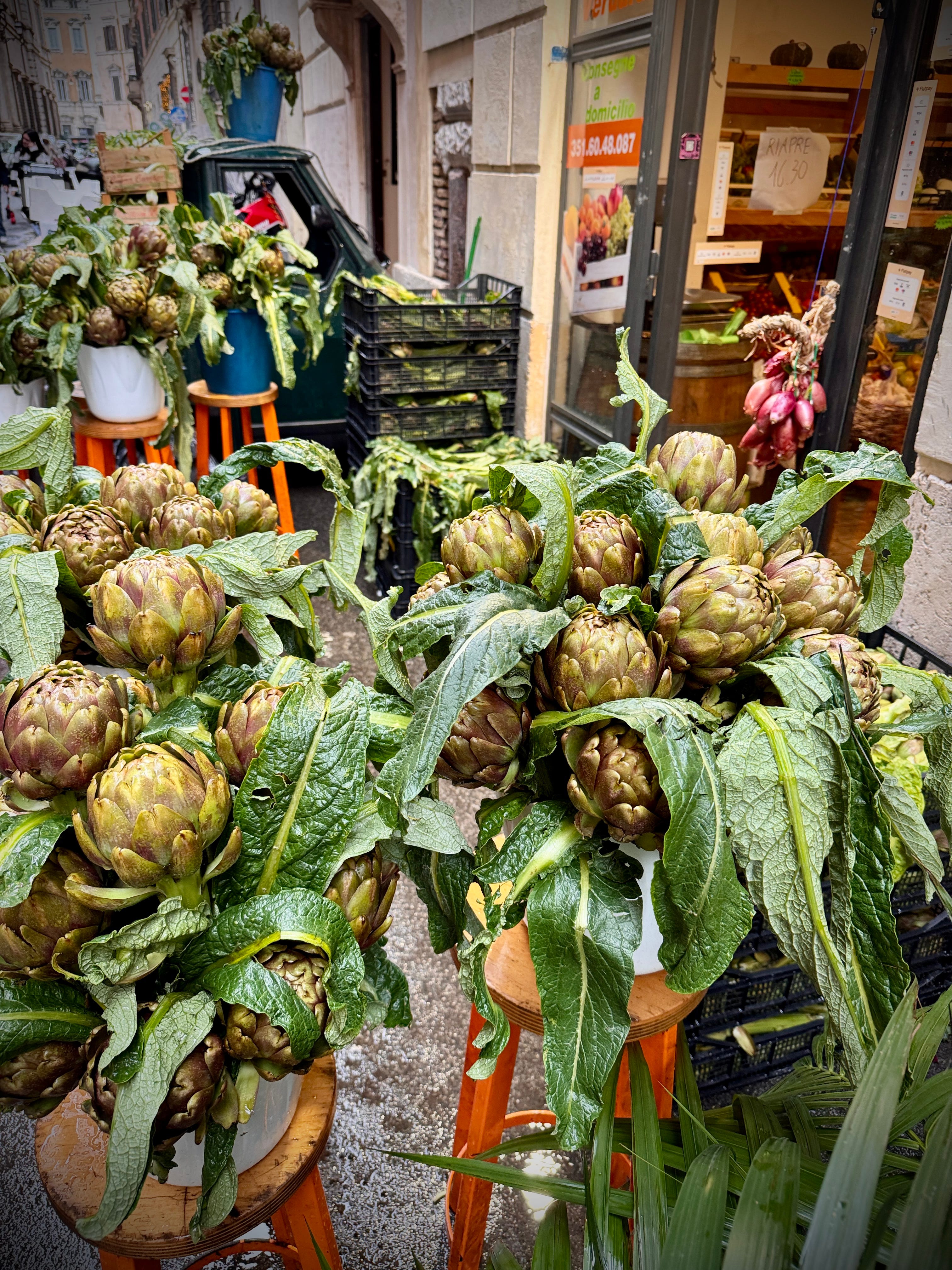
Speaking of plants, the artichokes have arrived. Italians eat more artichokes per capita than any citizens on Earth,[1] and they eat them in winter which is their glorious season. First come a smaller pointy variety but then, just after Christmas, we get the giant globes known as mammole which now spill out from market stands, their long stems dunked in buckets of water so they look like bizarre flower arrangements on an alien planet.
Besides being massive, the mammole are noted for their lack of sharp, prickly inner leaves and almost no fuzzy choke, which Italians call either barba (beard), baffi (moustache), or peluria (down, as in goose down). Why they have so many words for what seems like the same thing to the rest of the world is a mystery, but it may be related to the controversial observation that the Inuit have so many ways to say snow. Bottom line: with a giant Roman globe artichoke, once you strip away the tough outer leaves, cut off the top and peel back the stem to its tender inner core, it’s all edible.
Romans are not known for innovation (if you want cutting-edge anything go to Milan), and they’ve been preparing artichokes the same two ways for centuries: alla romana is braised in white wine and olive oil with mentuccia, an herb that tastes like a cross between oregano and mint, and known as lesser calamint to us; and alla giudia or Jewish style, which means flattened and deep-fried—basically, artichoke potato chips.
Even if you like to deep fry at home (I do), it’s hard to make artichokes alla giudia without a restaurant’s massive frying vats, so mostly it’s what you order in winter at restaurants in the Jewish Ghetto. Sometimes we get a giudia jones so strong that we go to the Ghetto and order nothing but fried artichokes—like five each, and we don’t give a shit if the waiter thinks we’re crazy and we wash them down with a bottle or two of a good Nebbiolo, that northern grape that tastes like tar in the good way. Dinner.
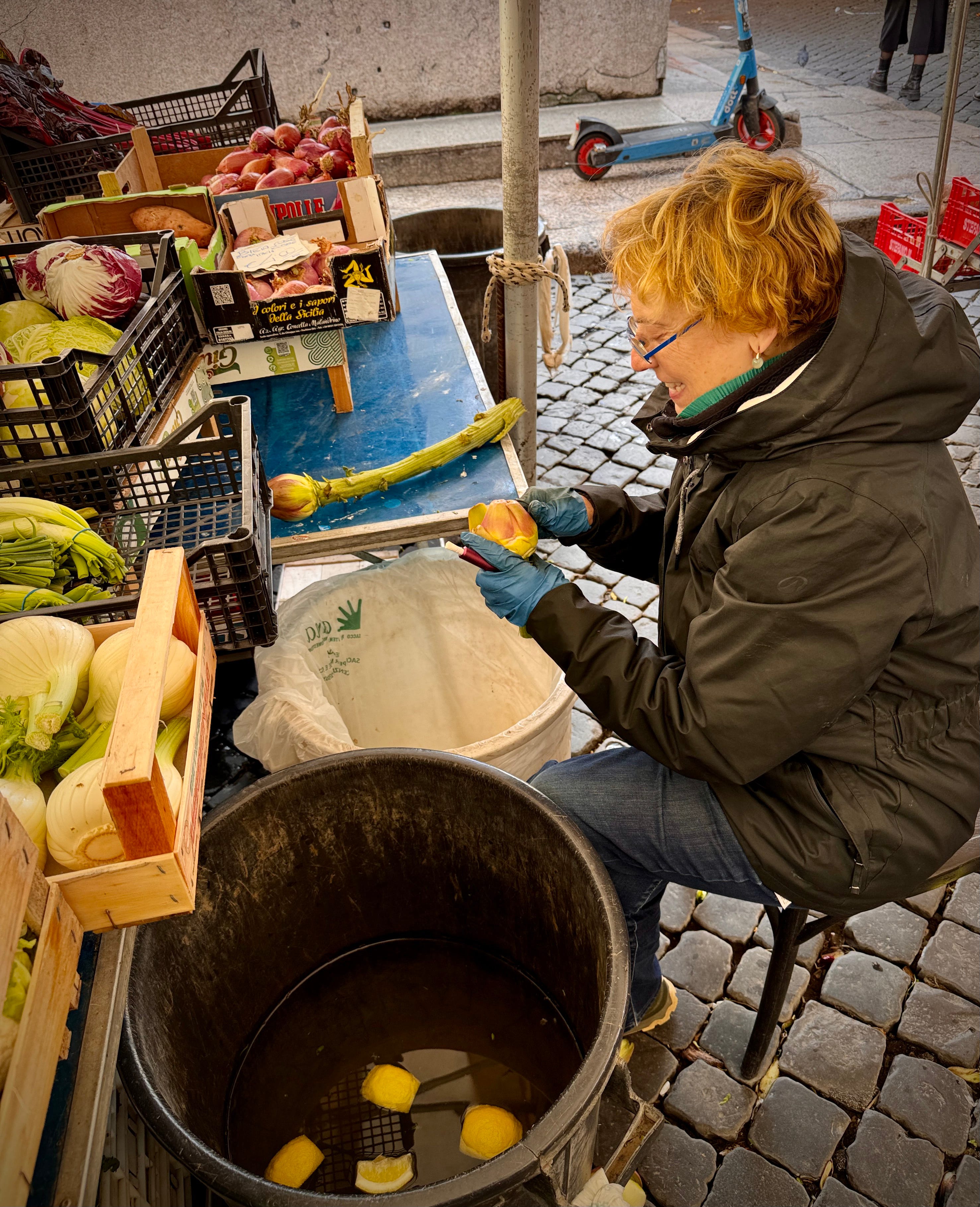
But sometimes I bring artichokes home. This week I was feeling browned off on brown food—all those meaty winter stews which I love, but it was time for something else. Something lighter, fresher. Spicy? Okay. Then it hit me: Vietnamese. I would make a spicy chile-lime dipping sauce (nuoc mam chanh) and toss it with slivers of raw artichoke in a salad. I figured the sauce was perfect because the lime juice would act as an acidifier to keep the choke slices from turning brown—a different take on the usual raw-artichoke marinade of lemon juice. To make it dinner I picked up some squid at the fish market and cut them into rings, then dipped them into boiling water for like five seconds—no more or they’ll turn to rubber.
Details: in a mortar, combine a chopped clove of garlic and one or three chopped Thai bird chiles depending on your heat tolerance. Add a pinch of granulated sugar and pound away until you have a slurry.[2] Add three tablespoons each of sugar, fish sauce, lime juice and water, then mix well or shake in a small jar. Thinly slice one or two cleaned artichokes and toss them with some of the sauce. Add the cooked calamari and more sauce to taste. Maybe some cilantro and basil.
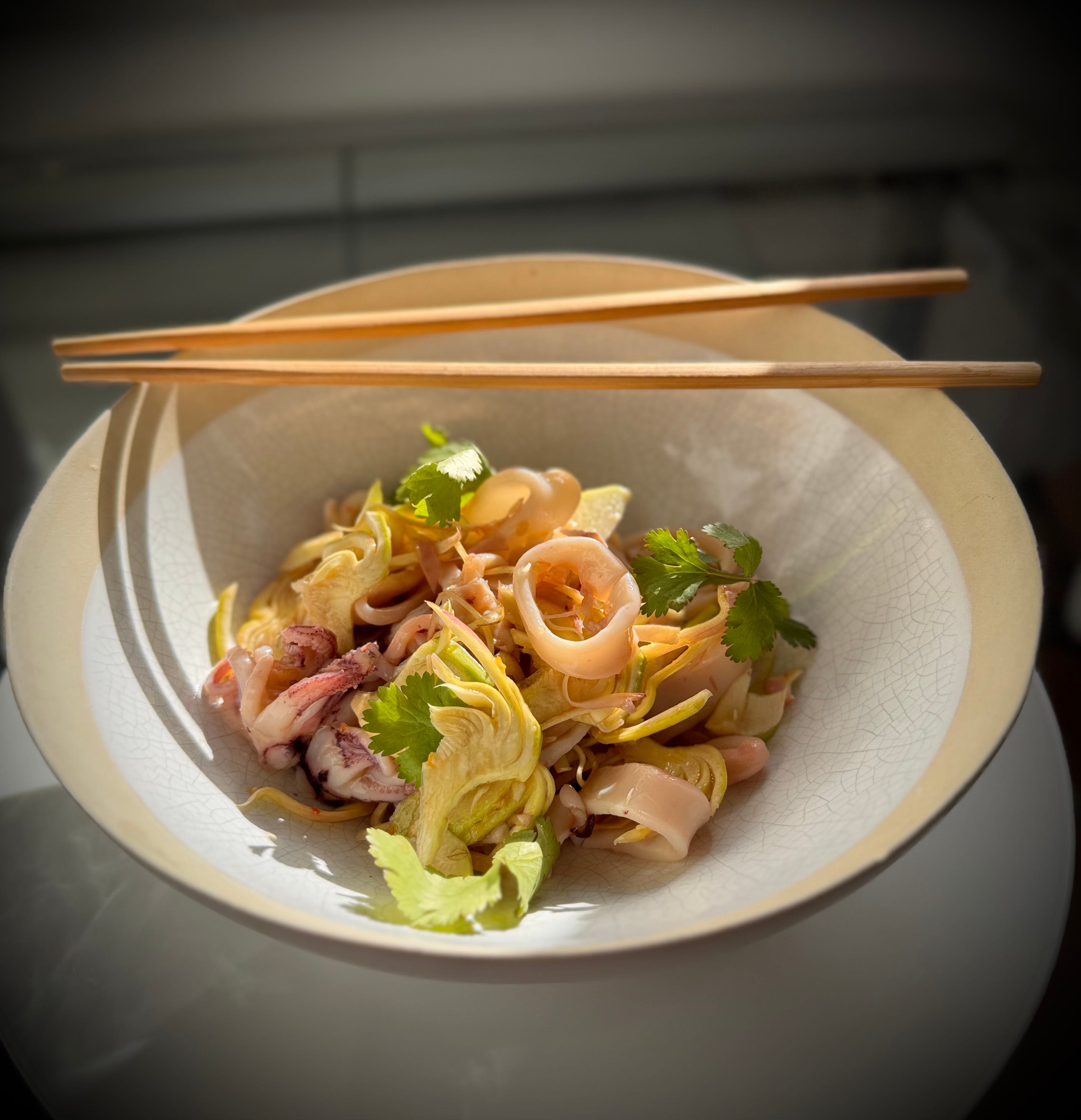
You could be American and add more stuff (Italians would keep it simple) like, I don’t know, thinly sliced cucumber rounds? Shallot rings (rinsed under running water to render less strong)? Segments of blood orange? Or substitute shrimp for the calamari?
In the end, it’s all about the artichokes, and something different in the dead of winter. Whatever town you’re in, get out your chopsticks and go there.
[1] Italy, Egypt and Spain together consume almost two-thirds of the world’s artichoke crop.
[2] Lots of cookbooks will tell you it’s fine to simply chop the dipping sauce ingredients, or use a processor. Bullshit. Buy a mortar and pestle.