
Ferraris and Futurists
On progress Italian style, and its historically disastrous flops

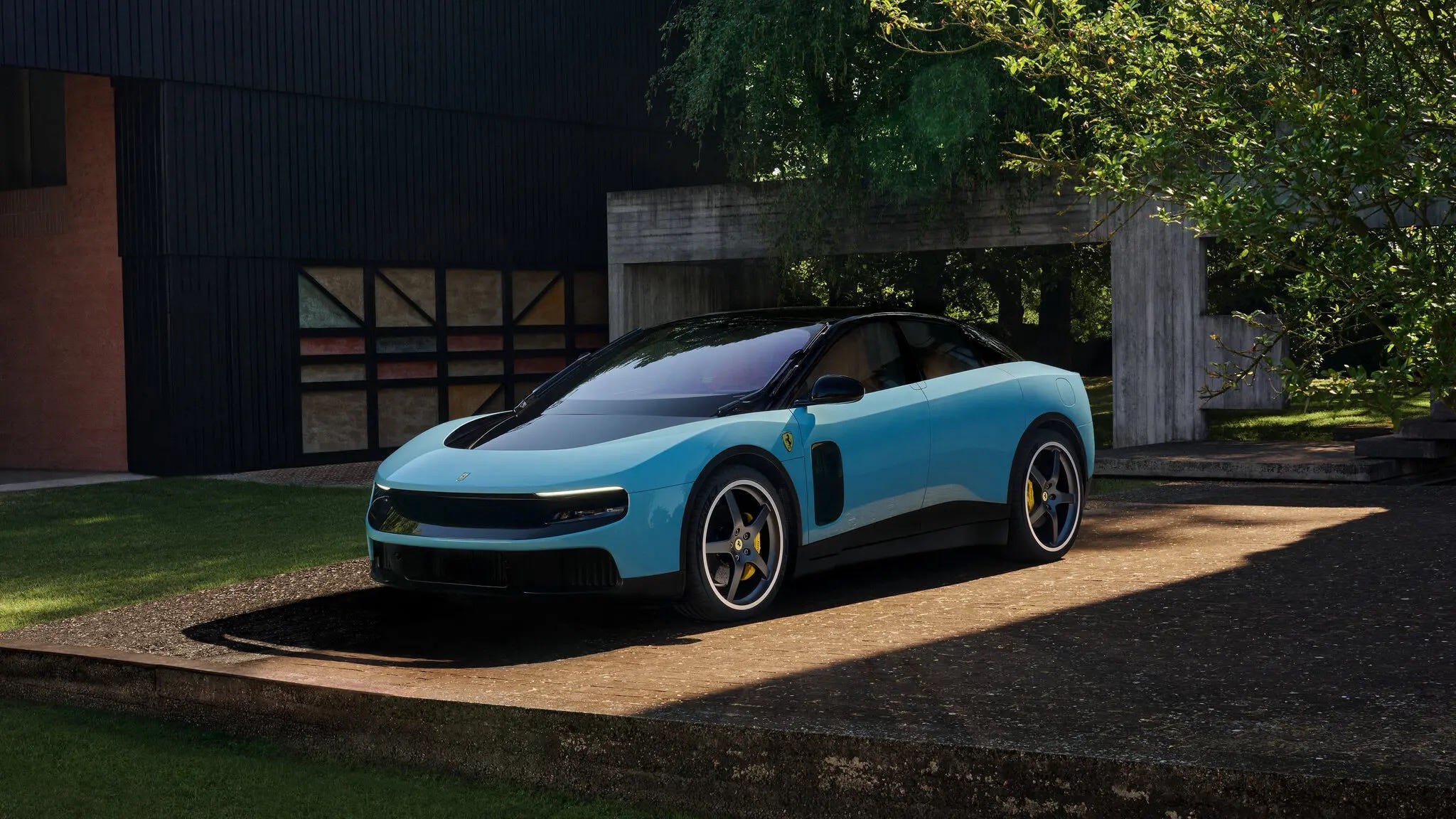
Ferrari just unveiled its first electric car, the Luce, to near-universal mockery. The five-seater, which but for the price ($640,000) and the horsepower (1,035) resembles a random Chinese E.V., has even been dismissed by a former Ferrari chairman. Che palle!
One exception is the noted Italian architect and engineer Carlo Ratti, who wrote a recent op-ed in the New York Times defending Ferrari’s effort: “The transition to E.V.s like the Luce unsettles us precisely because it disrupts the comforting visual language we live in; building the cars of the future demands that we expand our imagination.”
But the Luce neither disrupts nor expands our visual language. It’s not so much that the boxy baby-blue sedan doesn’t look like a Ferrari but that it does look like dozens of other cars, mostly from another country equally famous for noodles.
I have never owned a Ferrari and never will; my current transport in Rome is a non-electric Dutch city bike (itself a marvel of engineering) bought in Amsterdam. But in my life I have owned, among many other cars, a Triumph GT6, a Jaguar XKE, a T-bird ragtop and a Porsche, eventually crashing and/or regretting most of them while longing for a car that didn’t require a full-time mechanic.
Jaguar, which lost its design mojo decades ago, is converting to all electric cars despite flashing red market signs that performance-car buyers don’t want electric—indeed Porsche has cut way back on its electric dreams. Now comes Ferrari which is in another category, pricewise. They too seem to have short-circuited.
Take the car’s name, which means light in Italian—light as in sunlight, not light as in weight which is a different word in Italian, so right away there’s the potential for confusion among English speakers who have one word for both types of light. And the word is bound to be mispronounced by non-Italians—it is properly LOO-chay but English speakers will want to say…Loose? Generally speaking one prefers a tight car, not a loose one which implies parts falling off on the road, a frequent occurrence on my vintage British sports cars.
Brand names don’t have to mean anything, but they shouldn’t mean the wrong thing. And ideally they should be universally pronounceable. That said, Ferrari is not exactly a mass-market brand so I suppose we can give them a pass on the name.
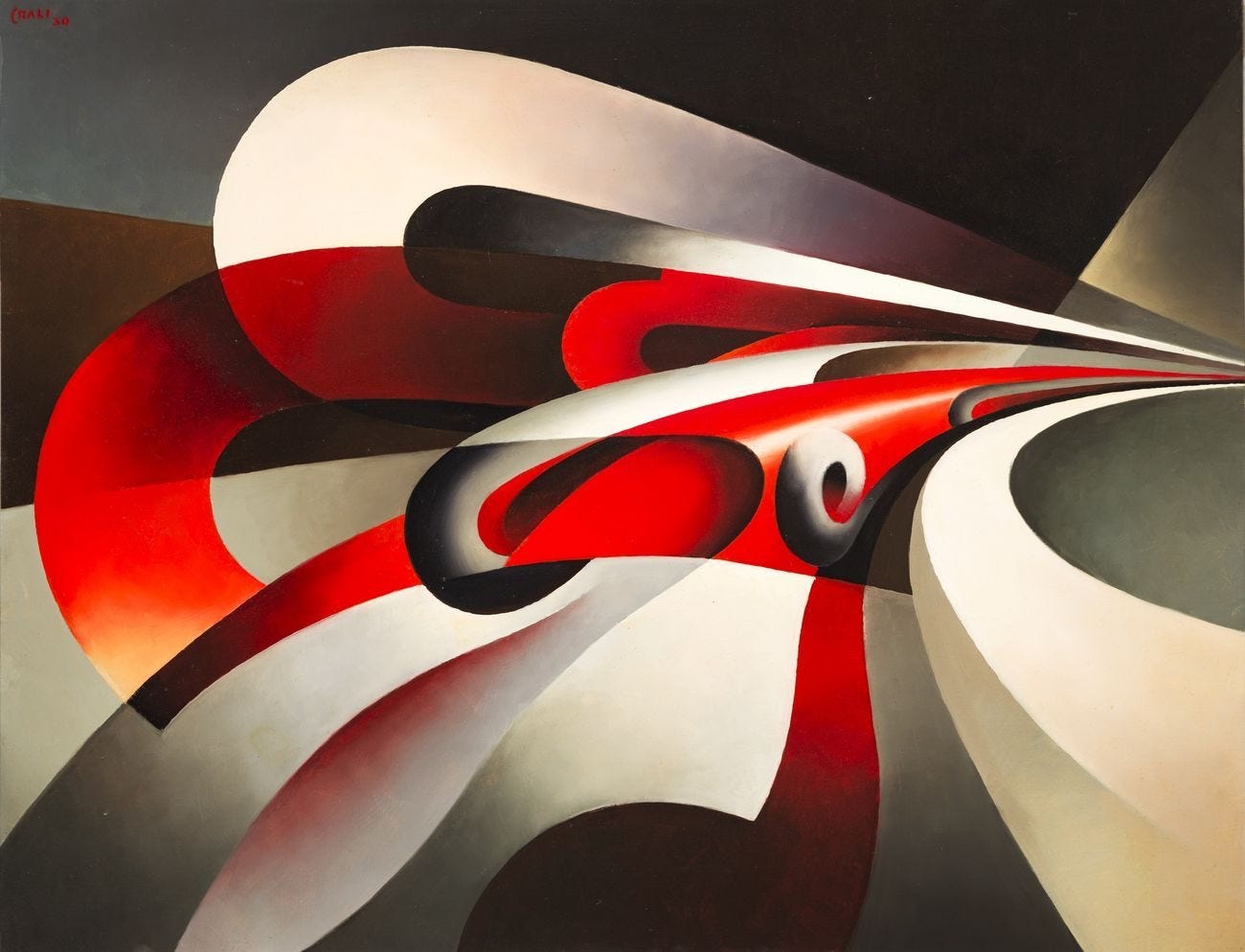
In the Times, Ratti gives them a pass all around, praising the Luce as “a nod to the messy, glorious struggle of human innovation.” Maybe. But his unqualified bravo verges into the territory of anything new is good, which sounds a lot like Futurism, the early-20th-century Italian art and social movement that, as Ratti surely knows, ended badly for his native land.
The Futurists, led by writer Filippo Tomasso Marinetti, rejected all societal traditions in favor of modernity and speed, especially as expressed in cars and airplanes. Indeed Marinetti, who condemned pasta as lacking virility, celebrated his own 1908 car accident as a portal into this new world of speed—a baptism of cleansing violence.
And what could be more cleansing than a glorious war?
Aided by incompetent politicians and a feckless king, the Futurists drummed up support for entering the First World War against Austria and Germany, even though neither country had threatened Italy. The result was more than a million Italian casualties, young men ripped apart by the machine gun (another new technology celebrated by the Futurists), while gaining only a few slivers of land.[1]
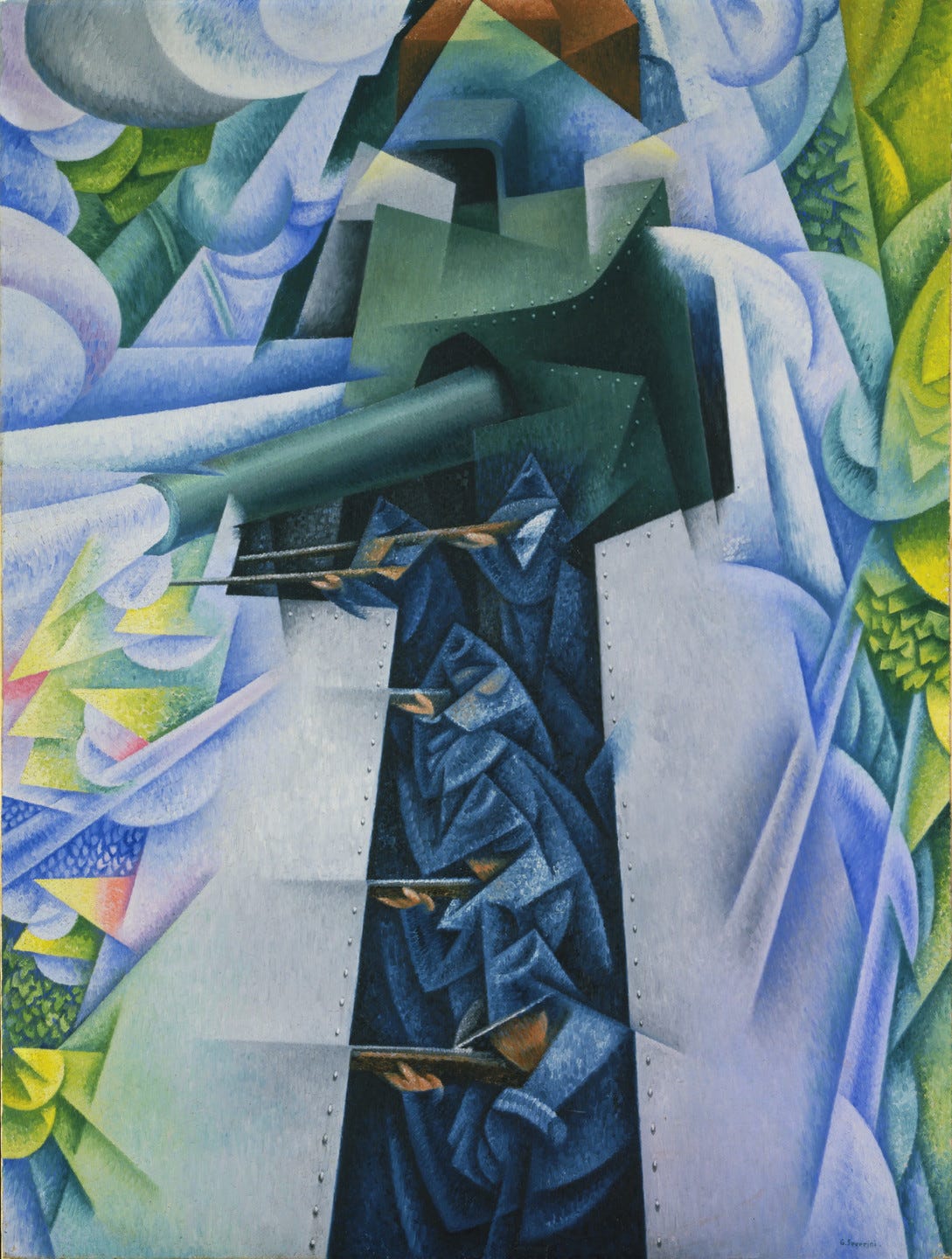
You might think the disastrous war would have set Futurism back on its boot heels. Instead, the movement aligned its commitment to violent “progress” with Mussolini’s nascent Fascist Party, encouraged by the art critic and patron Margherita Sarfatti, the dictator’s wealthy mistress and biographer.[2]
Marinetti, Mussolini and Futurism all died during the Second World War. As the devastated country rebuilt under a new republic, Italians tried something different: they decided to make cool things that people wanted, not just for the sake of change.
Which wasn’t technically new. Italians had previously invented the battery (Volta) and the radio (Marconi) while perfecting beautiful and functional versions of the typewriter (Olivetti). But in 1946, what Italians needed was a way to get around town. They couldn’t afford cars and at any rate the car factories, having been converted to aircraft plants, had been bombed into smithereens. One was the Piaggio factory near Pisa; its owner hired an aeronautical engineer named Corradino D’Ascanio to design a new, affordable motorcycle for the masses that would be easy to manufacture.
D’Ascanio despised motorcycles with their filthy exposed tires and chains, and the need to ride them like a horse, straddling the roaring motor. Instead, he came up with a simple step-through monocoque design, moving the engine to the rear, under a cowling, and with a sleek front fairing to guard against flying mud. Women, who had won the right to vote in Italy that year, could ride it in a dress.
The pinched-waist design of his new machine suggested the shape of a wasp—vespa in Italian. Which as it turned out could be pronounced in any language.

Steve Jobs hated the old saw that necessity is the mother of invention. He believed people don’t know what they need until you invent it. But the iPhone didn’t appear out of the ether: consumers instinctively “knew” they needed a Blackberry without a clunky physical keyboard and the ability to do more than email, even if they didn’t know it would be an iPhone. Jobs was meeting a need, elegantly. And so the Vespa. I have owned two, and I have taken them apart and rebuilt them by hand.
The Ferrari Luce feels less like the honest innovation of the Vespa or the iPhone and more like Futurism, and for that matter like AI—something that’s happening because, you know, progress gotta happen, and the ship is sailing. The Luce is a blip; the angst surrounding AI and the global chaos it could unleash sound like just what the Futurists ordered.
[1] Among the dead was the talented Futurist artist Umberto Boccioni. One of his sculptures is pictured on the Italian 20-cent euro coin.
[2] Sarfatti, an ethnic Jew who had converted to Catholicism, fled to South America in 1938 when Mussolini, bowing to Hitler’s demands, enacted antisemitic laws. Her sister perished on the way to Auschwitz.