
Italy Versus the World
Or, on which side is your bread (never) buttered?

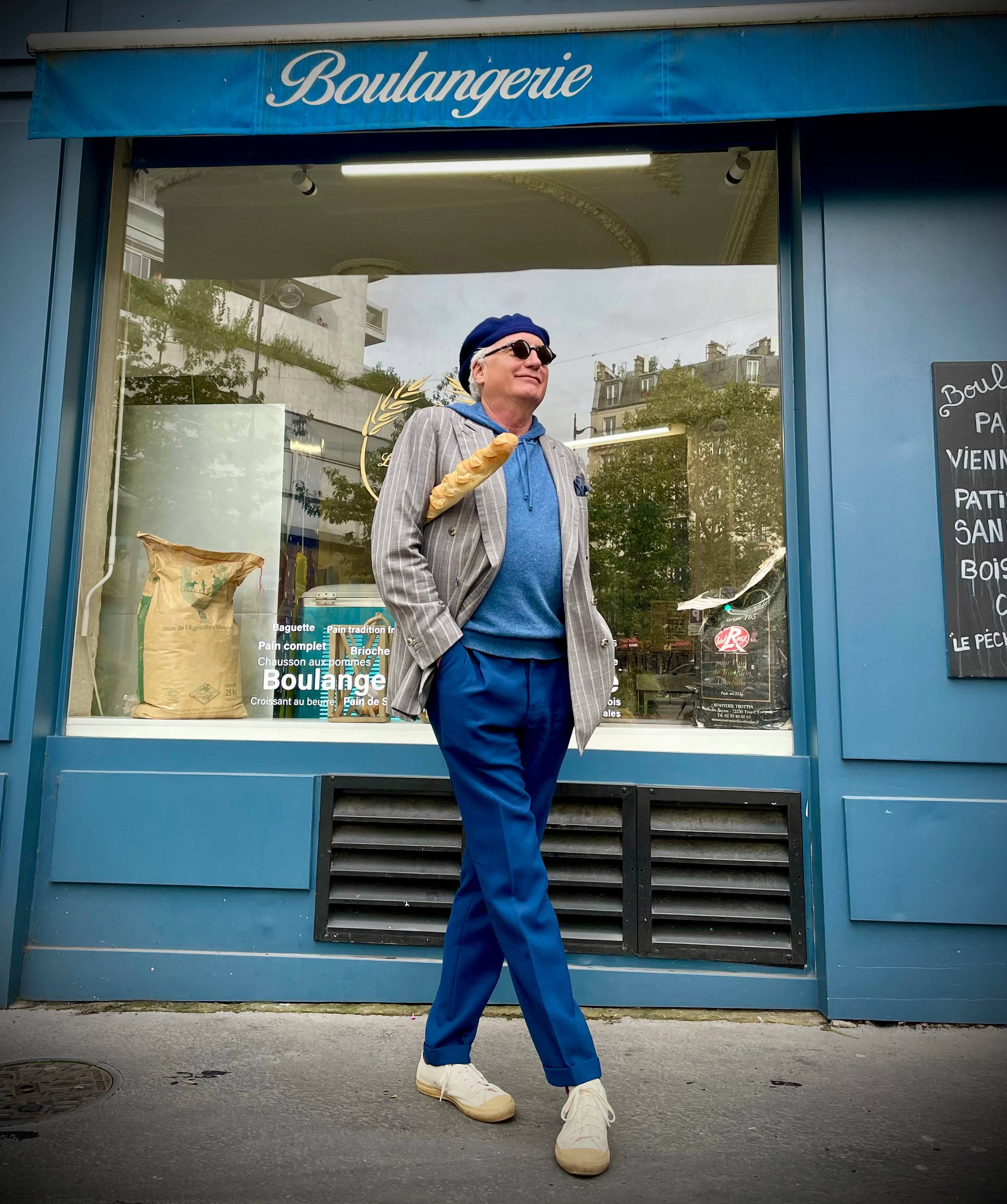
It was Bastille Day and we had met for aperitivi at Joséphine, one of the few French wine bars in Rome—me and a few French friends who live here, along with some Italians. It was a small space, now sadly closed, near Piazza Farnese and the French embassy, run by a lovely Parisian woman named Diandra, with only a few tables and a carefully curated list of Gallic wines. Diandra, who opened only when she wasn’t working as an international flight attendant on Air France, served small appetizer plates characteristic of her homeland: a pâté of sea scallops, a cheese selection with walnuts and conserves, glistening paper-thin slices of cured duck breast, crusty baguettes and, with everything, small terrines of sweet French butter.
Italians do not spread butter on their bread. So there was some awkwardness when my friend Frederic, an interior designer from the Gascogne region of southwest France who has lived in Rome for decades, demonstrated for the Romans the proper application of butter on a piece of baguette before mounting slices of meat and cheese. Another friend, an Italian film producer and well traveled, eyed the terrine as if it contained spackling paste. “I’m afraid of butter,” he announced.
I think he was kidding.
A remarkable fact about Italians is their general lack of curiosity, bordering on hostility, to the cuisine of their neighbors. To be clear: when Italians travel to France, Spain or Greece, they enjoy the local food. (Possibly less so in Germany.) But they rarely show interest in it back home. I know of no Italians who make any kind of French or Greek dishes in their own kitchens. Ever. As for dining out, Rome has more Mexican restaurants than Spanish tapas bars, certainly none near the Spanish Steps. Greek places are mostly gyro joints. I know of literally four French restaurants in the capital, not counting Joséphine.
Ethnic cuisine, meaning non-European, is another matter. Thanks to Asian immigration, Rome has dozens of decent Indian, Chinese and Japanese restaurants, although fewer Korean, Thai or Vietnamese. They are popular, but as Romans are generally averse to spicy food, the menus lean toward mild. As for grocery shopping, the Esquiline neighborhood behind the train station, on one of Rome’s seven hills, has a vast international public market where you can find everything from green papayas to dried Persian limes and Kashmir paprika; nearby are several well-stocked East Asian supermarkets. I ride my bicycle up there almost every week to shop. Most of the customers are themselves South Asian. There are not many Italians, by which I mean European Italians—the immigrants and their children, like my fellow contestants on MasterChef, are also now Italian, even if many Italians have a hard time accepting that.
I have a Roman friend, an artist of noble birth who is half Swedish and went to college in New York—not exactly an insular rube. She once confessed to me her fear of Chinese food: “I’m always afraid of what they put in there.”
Before you accuse her of being hopelessly parochial, let me introduce you to Wei Wei, my Chinese tutor from years ago in Maine. Wei Wei was of diminutive physical stature but not short on opinions. “My husband says I am too judgmental,” she once told me. “I hate my husband to say that!” She once counseled me that in restaurants in southern China, “never order fighting tiger and dragon. You will get cat and snake together. That’s so gross!” The implication being that you must never combine those two otherwise acceptable meats, sort of like the Italian revulsion to putting meatballs on top of spaghetti.
Indeed southern China is notorious for its cuisine of exotic animals, some of them endangered species and others possible disease vectors. I consider fried insects to be safe and sustainable, and I have enjoyed them at night markets in Guangzhou. But even up north in Wei Wei’s native Beijing, where dog is often on the menu (“make sure it’s prepared clean and nice,” she advised), there are no-go food zones. “When I was a little girl,” she recalled, “my mother wouldn’t let me get snacks from the street vendors because they never wash their hands and you don’t know where they put them.”
In that context, I can forgive my Italian friend’s aversion to the mystery food of Rome’s Chinese restaurants. That said, while Italians can be picky and suspicious eaters, they don’t suffer from the larger American fear of food. For example, I have never, ever heard an Italian question the safety of raw eggs in pasta carbonara—whereas virtually every American recipe acknowledges the presumably grave danger, often recommending overly complicated and possibly ruinous solutions such as double boilers, pasteurized eggs, and so on. In Italy as in America, shit happens—and, as a result, so do feces-borne salmonella outbreaks. But cases are rare, perhaps due to Europe’s stringent food safety regulations; Italians just get on with their lives and crack the eggs.[1] Likewise, Italian grandmothers pre-taste the raw mix of their pork meatballs with no concern that tomorrow they’ll be passing a tapeworm the length of a bucatini strand.
When I try to understand Italy’s relationship with foreign food, I find it helpful to think of the country as what might be called a net exporter of cuisine. I’m using an economic term but I mean it in a cultural context. The obvious example is pizza, arguably Italy’s national dish, enjoyed all over the world. According to Wikipedia, there are even five pizzerias in North Korea,[2] after Kim Jong Il brought over Italian pizza makers to train the local cooks.
Speaking of Asia, we could look at Thailand—a country with about the same population as Italy. It’s possible there is more pad thai being stir-fried overseas than in all of metro Bangkok. I might be inclined to consider China and India as net cuisine exporters, except their huge size probably indicates more native cuisine at home than abroad.
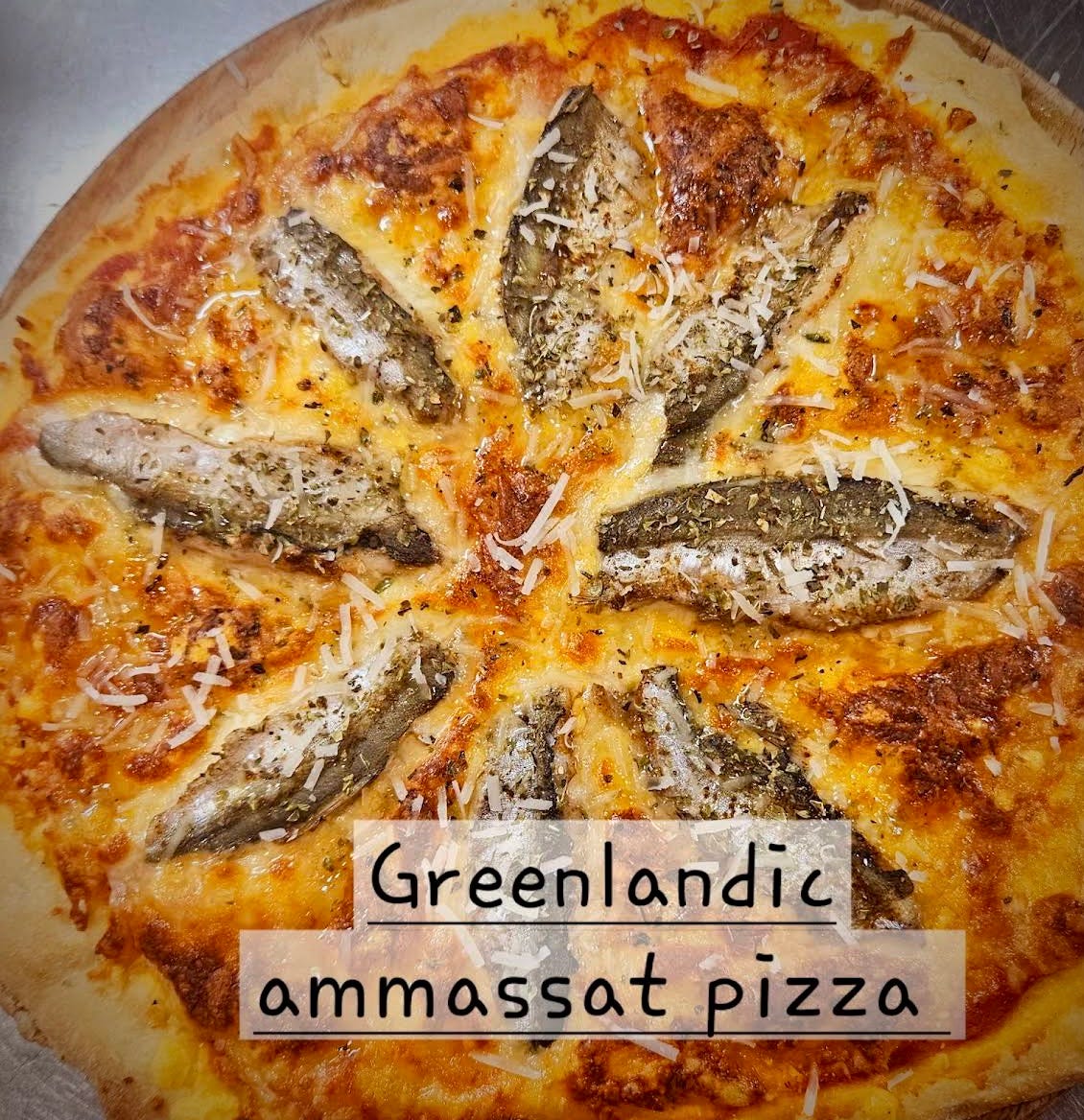
Net importers of cuisine would have to include the U.S. and most northern European countries. As an extreme example take Greenland, that noted autonomous territory of Denmark. The national dish of Greenland is suaasat, a stew made of seal meat and blubber (like fat but with more blood vessels) along with potatoes and barley. Seal is a primary source of protein for indigenous arctic people, including those native to other European countries like Norway and Finland. But you will not find seal steaks alla fiorentina in Italy. On the other hand, according to Google Maps, there are even more pizzerias on Greenland (population 57,000) than in North Korea. To look at customers’ uploaded photos, some of them appear better than the pizza in Milan (sorry Milan). You can even get a pizza with reindeer meat (unavailable in Naples), drizzled in crème fraîche (ditto), with a bottle of Châteauneuf-du-Pape (good luck with that here).
You might as well ask for butter in Rome.
[1] Italian supermarkets do not refrigerate eggs because in Italy eggs are not pre-washed, leaving their natural germ-resistant coating intact. On our farm in Maine we never refrigerated freshly laid eggs from our chickens and ducks; sometimes we found eggs under trees, not knowing how old they were. We ate them, and survived.
[2] Yes, there is a Wikipedia page called “Pizza in North Korea.”
As an Italian here in Canada 🇨🇦. I once worked with Asians. Meaning Chinese people. And one lady remarked that Pizza was the LAST thing her husband would eat. I frankly was a little taken aback. What a weird thing to say. So. I am not surprised that Italians safeguard their heritage. And rightly so as you mentioned the Chinese have eaten many exotic foods. It’s to me a sad fact that Italy has Chinese immigrants. And I’m taken aback that my cousins eat sushi and grocery store have people making sushi! Now with the raw eggs and milk issues. When we were babies. Guess what our moms and grandparents used a raw mixture with sugar and Marsala wine. Why? As an appetite enhancer. And the raw meat well what about tartar. Completely raw! It’s a different world than our generation and parents generation. Italian culture has been changed.
Great column for the week of Easter and Pesach/Passover. As a Jewish mutt whose forebears were an unholy and unsanctioned mix of Ashkenazi and Sephardi (each side mourning their spawn for dead when my great grandparents merged the two, like Fiat subsuming Chrysler), I’ve extended my family’s tradition of sampling the cuisines of both Eastern Europe (brisket, borscht, bigos) and Western Africa (root vegetables, dried fruits, lamb) at the annual Seders. A regular hit is Moroccan charoseth (pr. ha-RO-set), the nutty, fruity, wine-soaked spread meant to look like the thick mortar the Hebrew slaves used bind the building blocks of Egyptian storehouses (not the Pyramids, no matter how much we want to take credit for them!) but tastes like ambrosia. I always make enough charoseth to last Passover’s full eight days, because nothing beats the early-morning buzz that comes with a fist full of drunken charoseth on matzoh with your morning coffee. I‘ll take that over a squid-ink-pupilled fish-eyeball at Nomi any day. Carp diem!