
Let’s Eat Some Fat!
On Italy’s exquisite spreadable salami

“What’s that smell?”
Alexandra brightening my door, in blond braids and reeking of garlic and spices. Not her normal perfume.
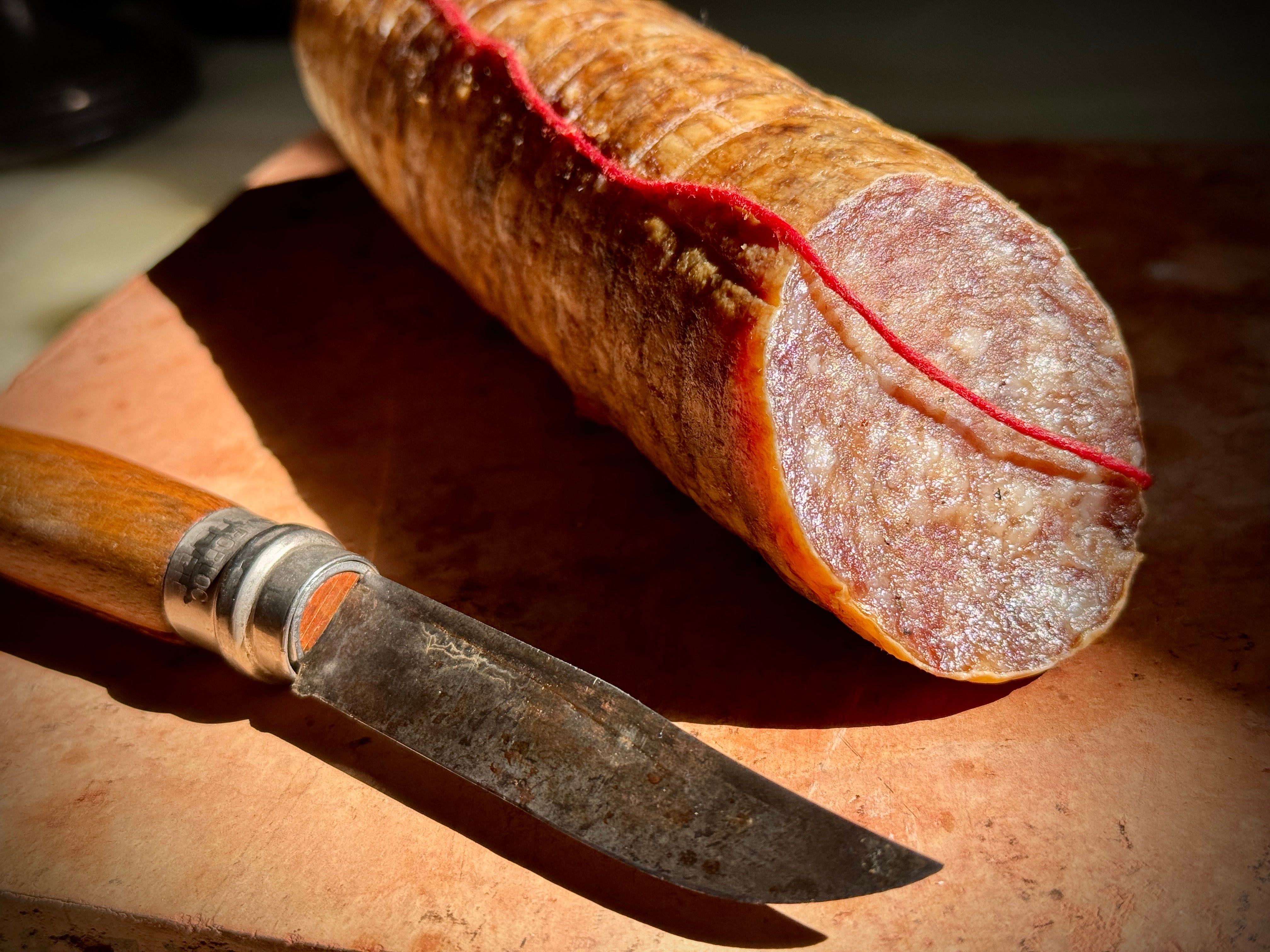
“Ciauscolo!” she answered, holding up a long pink salami.
Ciauscolo! The rare spreadable salami from the Marche, the mountainous rural region of Italy on the Adriatic coast, east of Tuscany.[1] Alexandra spent her formative summers in the medieval hilltop village of Cingoli, deep within the Marche, where pigs run (sort of) wild, foraging for acorns, and the resultant salami tastes like mountains and meadows if you can imagine that.[2]
If North Americans know anything about Italian spreadable salamis they probably know about ’nduja, the funky spicy Calabrian specialty currently trending globally. ’Nduja, bright red and fiery, is made from ground pork, sun-dried chili peppers and salt. Basta. Ciauscolo, by contrast, has no peppers and is thus neither red nor hot. Instead, pieces of ground pork shoulder and belly from those acorn-eating pigs are macerated with garlic (lots), white wine, fennel seed, salt and pepper, plus aged prosciutto.[3] Then you stuff it into small intestines and cold-smoke it over juniper wood before curing for a few weeks. What happens is a flavor possibly more complex than landing a man on the moon.[4]
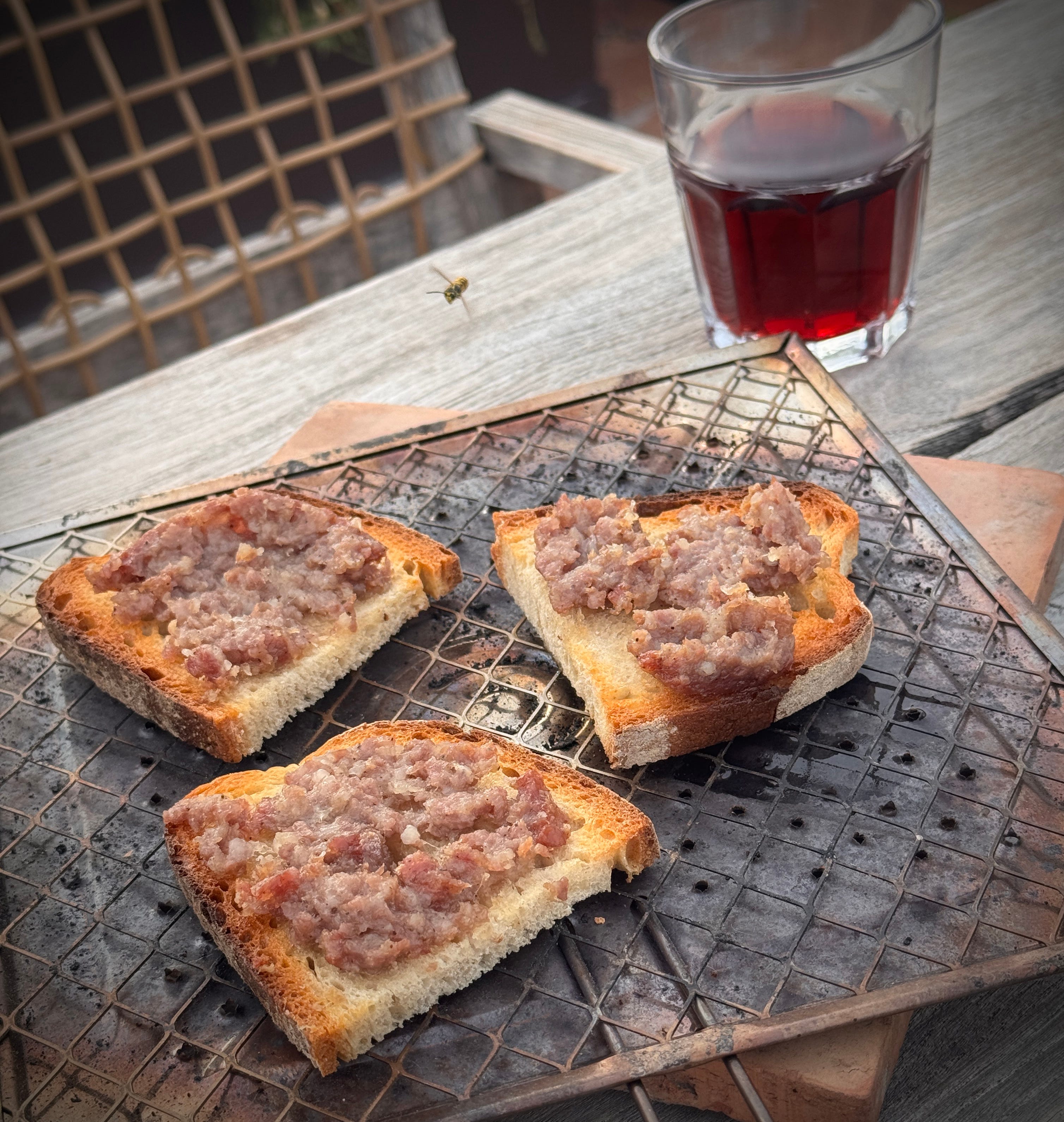
Then there is the texture, which is soft enough (at room temperature) to spread on toasted bread, preferably local casereccio, the word for any rustic loaf, and preferably straight off an open fire. What makes caiuscolo, and for that matter ’nduja, spreadable is fat. Lots of it. And so we have arrived at our theme.
Where would we be without fat? Surely uncomfortable sitting down, but also dining drearily. Of course fat is functional, as when you need to fry something, yet it is so much more. Fat is the velvet sheen on the steak, the molten quilt on the cheeseburger. Without fat our Christmas goose is cooked, but dry as a tire. We can dismiss the repellant term “mouth feel” while still conceding the point: fat is the silken thread that embroiders a tapestry on our tongue.
And to what end would we sacrifice this pleasure? It is now understood that fat doesn’t make you fat. Neither really do carbs—what makes you fat is consuming more calories, from whatever source, than you burn.
We know fat is the good stuff because it has protein, which is why our taste buds are programmed to like it. It was long thought that despite its obvious textural qualities in the mouth, fat can’t be “tasted” like sweet, sour, salty etc. But more recent studies have found a fat-tasting protein on the tongue, indicating the presence of a fat-loving gene. Moreover, some people appear genetically programmed to like more fat, perhaps too much—and even for those of us who aren’t so programmed, it’s now known that eating lots of fat will alter our fat-loving gene to make us want more.
And so we have Jack Sprat who could eat no fat—his wife could eat no lean. Together, goes the nursery rhyme, they licked the platter clean. They sound like a kinky-fun couple who possibly made special home movies, but I pity Jack; Mrs. Sprat got all the good stuff.
This brings us to a necessary digression on the importance of moderation in all things, best expressed by Keith Richards in his excellent autobiography Life, on the subject of drugs: “I was very meticulous about how much I took. I’d never put more in to get a little higher. That’s where most people fuck up on drugs. It’s the greed involved that never really affected me.”
Wise words from a village elder, and so it goes with fat. Given a bucket of bacon drippings, a dog will eat until it dies. We must endeavor to control ourselves, sadly even with bacon.
Which doesn’t mean skimming all the fat. I get it: sometimes fat is just unwanted grease, as in a pot of homemade chicken stock. You want to remove it—then save it for the next time you roast potatoes. Of course that would be schmaltz in Jewish cuisine, which is derived from the Yiddish schmalts. It can theoretically be any rendered fat but generally means the poultry kind. In Germany, Schmalz is specifically pork lard according to law.
Rendered beef fat, commonly called tallow, has been in the news thanks to its promotion by U.S. Health Secretary RFK Jr., he of the skinny Nantucket ties and too-narrow button-down collars, among other more seriously odious characteristics. Tallow is undeniably tastier than vegetable oil when making French fries (although the French fry theirs in horse fat), and may even be healthier if you listen to some proponents.
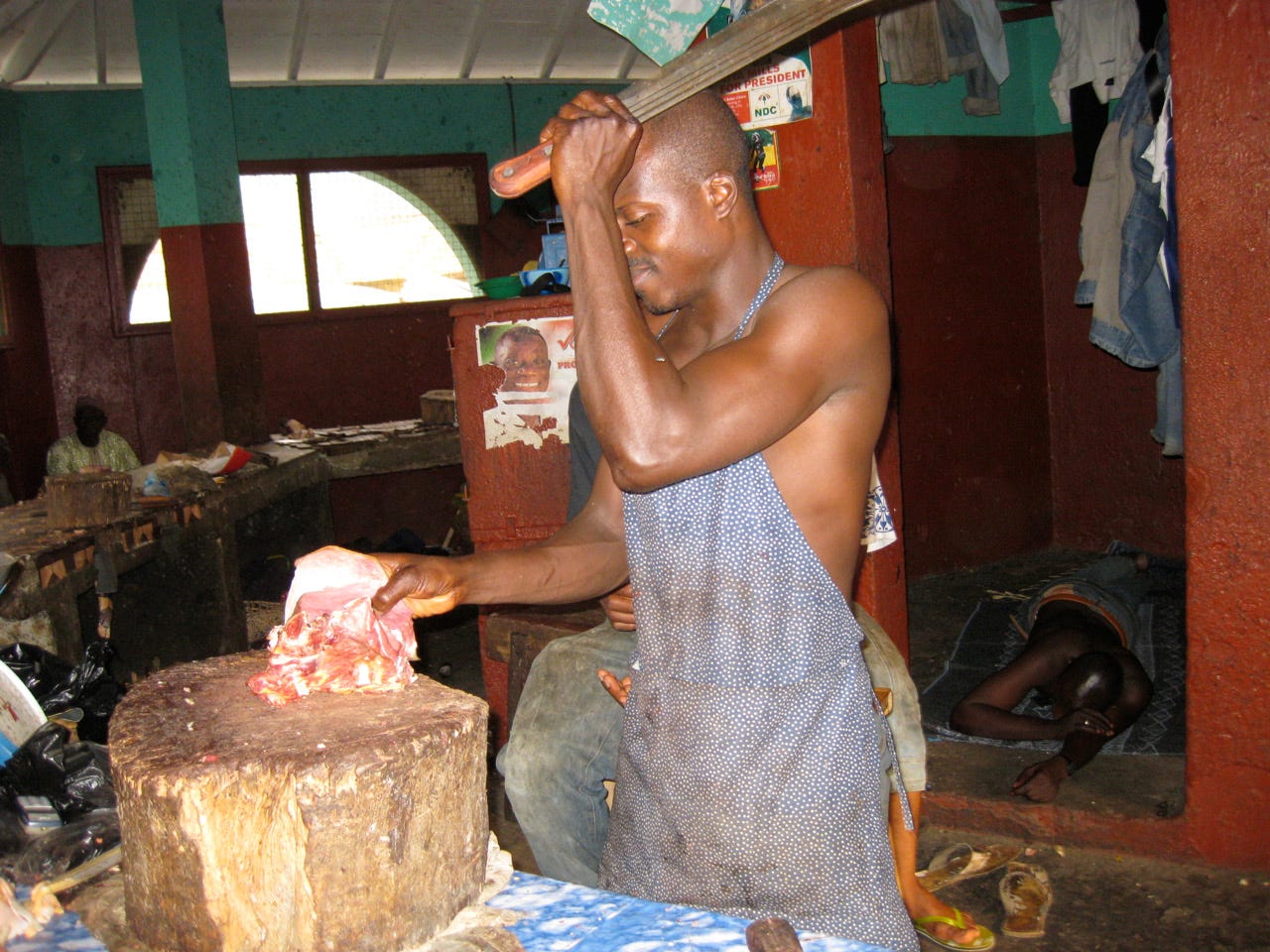
Whatever it comes from, rendered animal fat is not to be wasted. When I lived in Ghana among cassava farmers who earned a dollar a day, the idea that you would waste even one gram of protein was unimaginable. Meat itself was a rare treat, its fat a precious gift. Of course, when your work involves swinging a machete under the equatorial sun, you can eat a lot of fat and not gain an ounce.
I’m fairly certain you can’t find genuine ciauscolo in North America although I’d be happy to be proven wrong.[5] Nor is anyone importing ’nduja from Calabria. But what you can find is a very good American-made ’nduja from a mail-order company in Seattle, founded by Calabrians. I encourage you to get some, and spread it, lots of it, on some fire-roasted rustic bread.
[1] Linguistic note: the Italian name for the region is Le Marche (pronounced lay-MAR-kay) which comes from ancient Teutonic for “the borderlands.” English speakers call it “the Marche,” pronounced like the month of March or, sometimes, “the Marches,” which more accurately reflects the plural of the Italian name.
[2] They don’t technically run wild but are fenced into large, free-roaming plots. Having raised and butchered my own pigs who occasionally breached their fences, I am keenly aware that they are too smart to be herded much less come when called.
[3] I have written previously about the Italian aversion to garlic. There are exceptions.
[4] I know, the entire Apollo Computer Guidance program could fit on an iPhone, but you know what I mean.
[5] The real stuff from the Marche is a protected IGP.
Give me fat any day!! I made a pie crust for our Christmas Eve tortiere. A French Canadian meat pie. Rather than dreadful Crisco. We bought beef tallow. The difference in taste of the pie crust is unmatched!
Also my Calabrese mother in law make at Easter a traditional meat filled stuffed pizza foiled with salami egg and pork fat belly! Max this spread sound delicious!