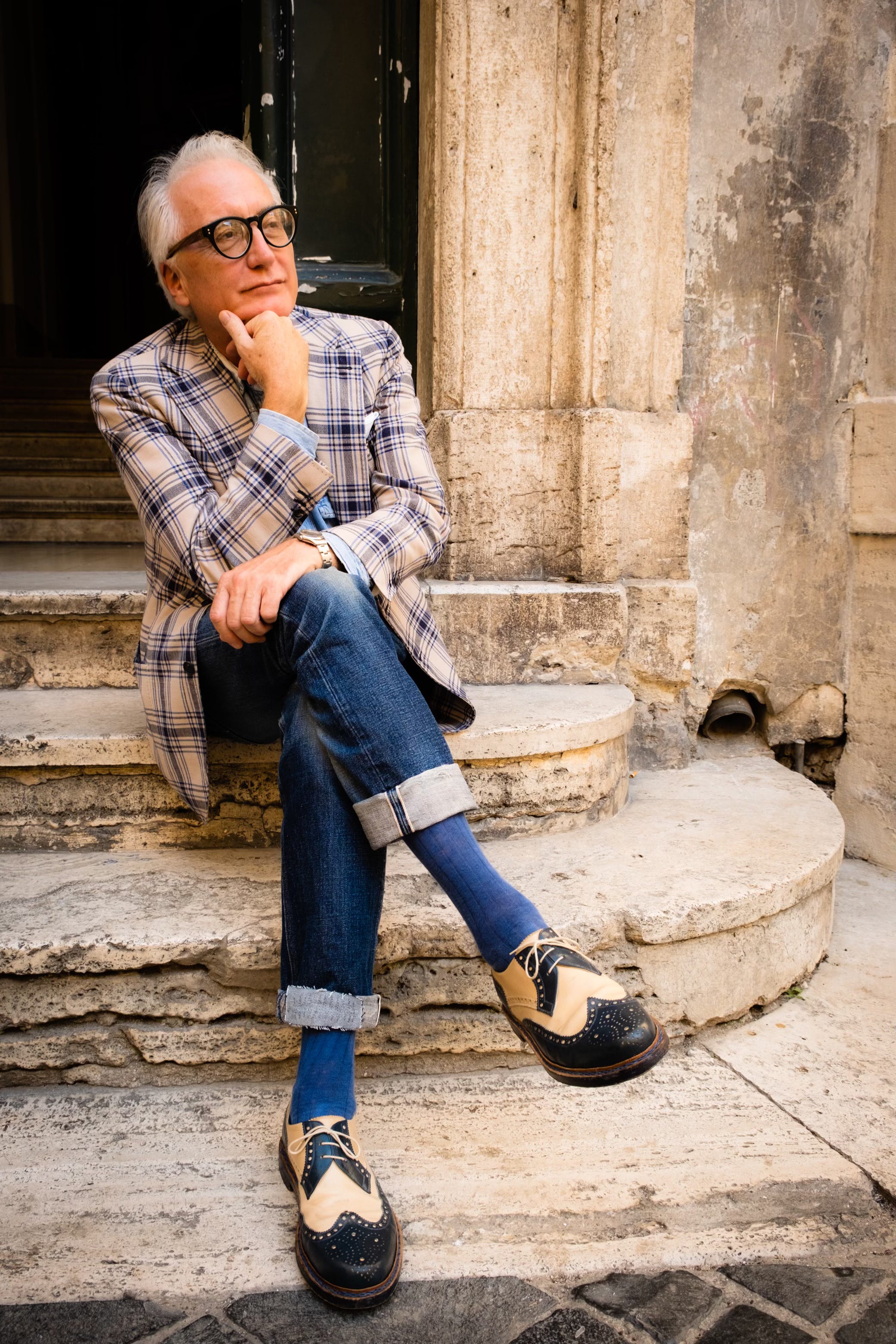
On Owning Clothes
In defense of expensive threads


An old Boston blueblood, of the sort with a townhouse on Comm Av and a bank account funded before recorded history, once said, when asked where he bought his suits: “I don’t buy clothes, I own them.”
I was thinking of that doubtless apocryphal anecdote recently while planning to write about how not to buy clothes, in advance of the holiday shopping orgy. Then the New York Times beat me to it, sort of, with a guest essay by Isabel Cristo, identified as a fact checker at New York magazine.
The essay, headlined “Buy Better, Buy Less, Feel Smug About It,” considers well-made clothing as a possible antidote to over-consumption. She begins by positioning quality clothing as the latest itinerary along her personal pilgrimage to shop responsibly: First she dug vintage but that became trendy, then the vintage shops filled up with second-hand throwaway shit from Zara. Now she fears quality is also on the road to ruin: “If we’re not vigilant, ‘quality’ risks becoming a trend in itself.”
I get it—she works at a New York City magazine dedicated to finding, defining, celebrating and inventing trends. To a hammer, everything looks like a nail etc. I used to be an editor at those magazines. She has my sympathy, but not my agreement.
Because buying quality clothes, then taking care of them and wearing them forever, is contrary to the meaning of trendy. By definition, it’s anti-trendy. Even boring—possibly more boring than the dinner-table conversations in the townhouse of that lock-jawed Boston WASP with a wardrobe full of Brooks Brothers sack suits from the JFK era.
Ms. Cristo then seeks to equate the quality-clothing “trend” to the Slow Food movement, which began here in Italy in 1986 as a reaction to the global infestation of fast-food chains. In her trendspotting worldview, Slow Food devolved into yet another trend in which “social elites patronized gorgeous wood-paneled restaurants and expensive specialty grocery stores, buoyed by the knowledge that their habits were morally, as well as nutritionally, superior.”
Well.
This would come as a surprise to the 700 citizens of the mountain village in Calabria where my two sons live. There are no Michelin-starred restaurants in Dasà, but every Wednesday a truck comes around selling fresh produce (notably the fiery round chiles famous in the region, which are stewed with potatoes). On Friday the fishmonger arrives, announcing her catch of the day from a speaker mounted atop the truck which will definitely wake you up if you missed your alarm. My older son Harper gathers olives from his trees and takes them to the local frantoio (olive oil mill) to press his oil. His father-in-law gathers porcini mushrooms in the forest, not that he would ever tell anyone where. This is what Slow Food means for people who don’t work at magazines.
Back in New York, our style writer, having established that quality clothes are a new trend, laments how said trend is debasing quality. “Today,” she writes, “you can buy garbage at every price point. Raw material and labor costs have surged, and many luxury brands appear to be cutting corners to sustain their profit margins.”
Doubtless true. But for people like me who have spent a lifetime caring, quietly, about well-made clothes, luxury brands are for amateurs. They can be well-made (the knitwear sold by family-owned Brunello Cucinelli comes to mind1), but mostly they’re about status, which is unrelated to quality. When you buy a garment from a company with “immersive” stores on luxury shopping streets in city centers around the world, you’re paying their rent. Also for their full-page ads in Condé Nast magazines. (Those magazines again!)

By contrast, genuine quality clothes are typically made in cramped ateliers by artisans who don’t advertise except maybe on social media, like once a month because…they’re busy making clothes. If they have physical stores at all, they are usually small and off the main shopping drags. Their online stores, should they exist, are not “robust.” It takes work to find them, and to order from them.
To name one personal favorite: Anatomica in Paris, with in-house designs that are sort of French chic and sort of Japanese streetwear and sort of American preppy. They have some stuff online, but really you need to go. (Easy for you, I can hear Americans. But I drool over cool shops in New York and LA that I can’t fly to for the weekend.)
None of this stuff is cheap, but no more than bullshit luxury brands. And you’re paying an honest price for materials and labor, not overhead and marketing.
In the real world, this is not how most of us buy clothes. I cop to having bought a pretty nice open-knit beach shirt at Zara last summer, and I happen to like Uniqlo t-shirts which are good quality for under $20. That said, spending more on quality clothes can save money in the long run. This is particularly true with footwear.
Take Chelsea boots. As a young man I used to buy Blundstones, those globally ubiquitous hipster boots. Blunnies are nominally Australian, but since 2007 they have been made in the usual cheap-labor countries around the world, from Thailand to Mexico, of cheap materials. Which is why they currently cost $200. I’m told their quality-control has improved recently, but I recall needing to replace mine every few years after the cheap rubber soles split and disintegrated. Meanwhile the uppers are of a dull corrected leather that will not take a shine, although that could be a feature to some fans.
Or you could spend $600 on a pair of genuine Australian-made boots from R.M. Williams, as I did ten years ago. They are made from fine leather that takes a shine and lasts forever, with care. The leather soles eventually wear out (mine haven’t yet) but are Goodyear-stitched to allow replacement—either by the company in Australia ($125 plus shipping) or by many local cobblers. They will be the last Chelsea boots you ever buy. In short, you will own them.
So this Christmas and beyond, let’s give ourselves permission to shop at Zara. But let’s also think about owning a few more quality clothes, and taking care of them. In this way we can avoid fashion trends. And the trend of calling everything a trend.