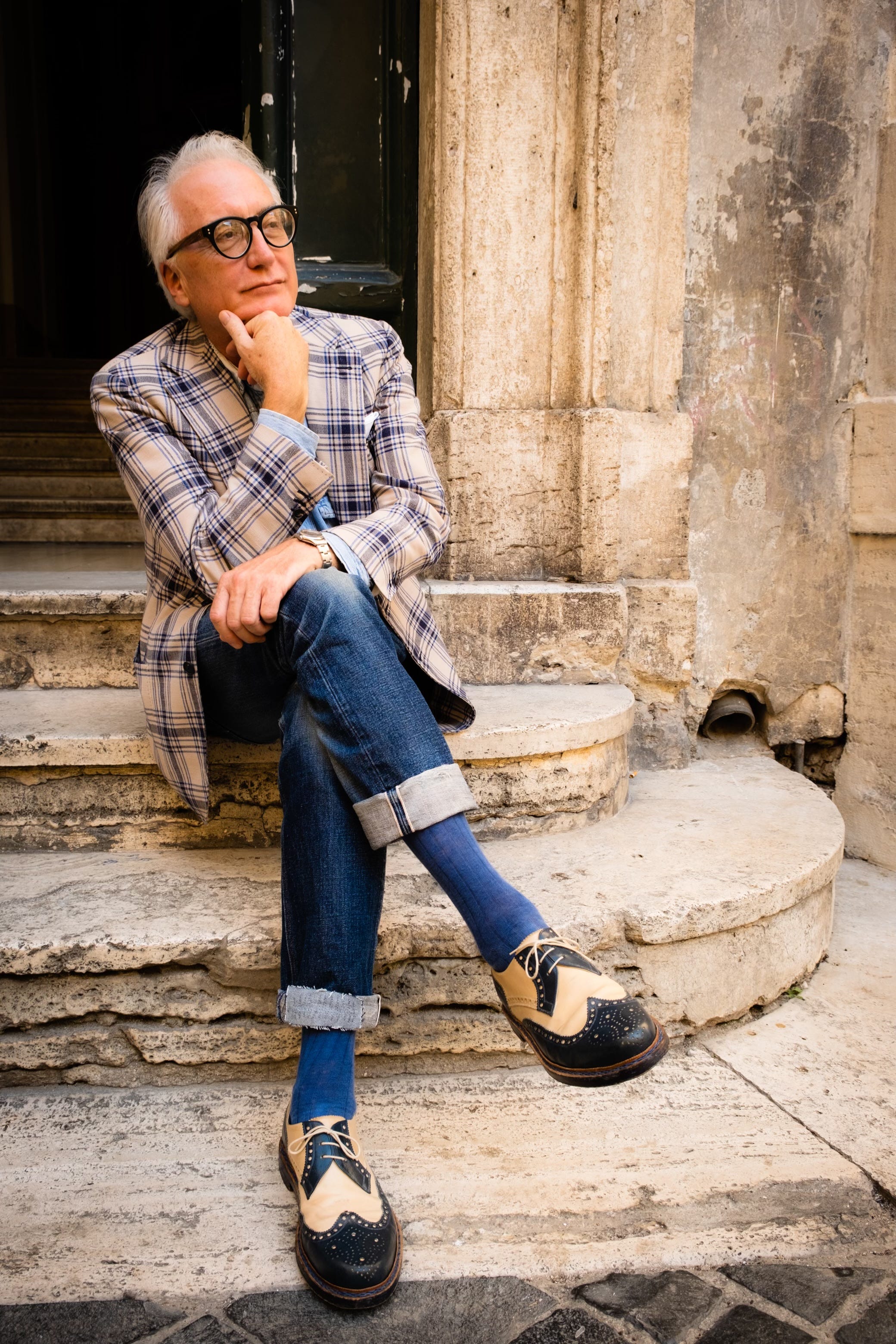
Talk a Mile in My Shoes
As much as food, clothes can tell stories. Make them your own.

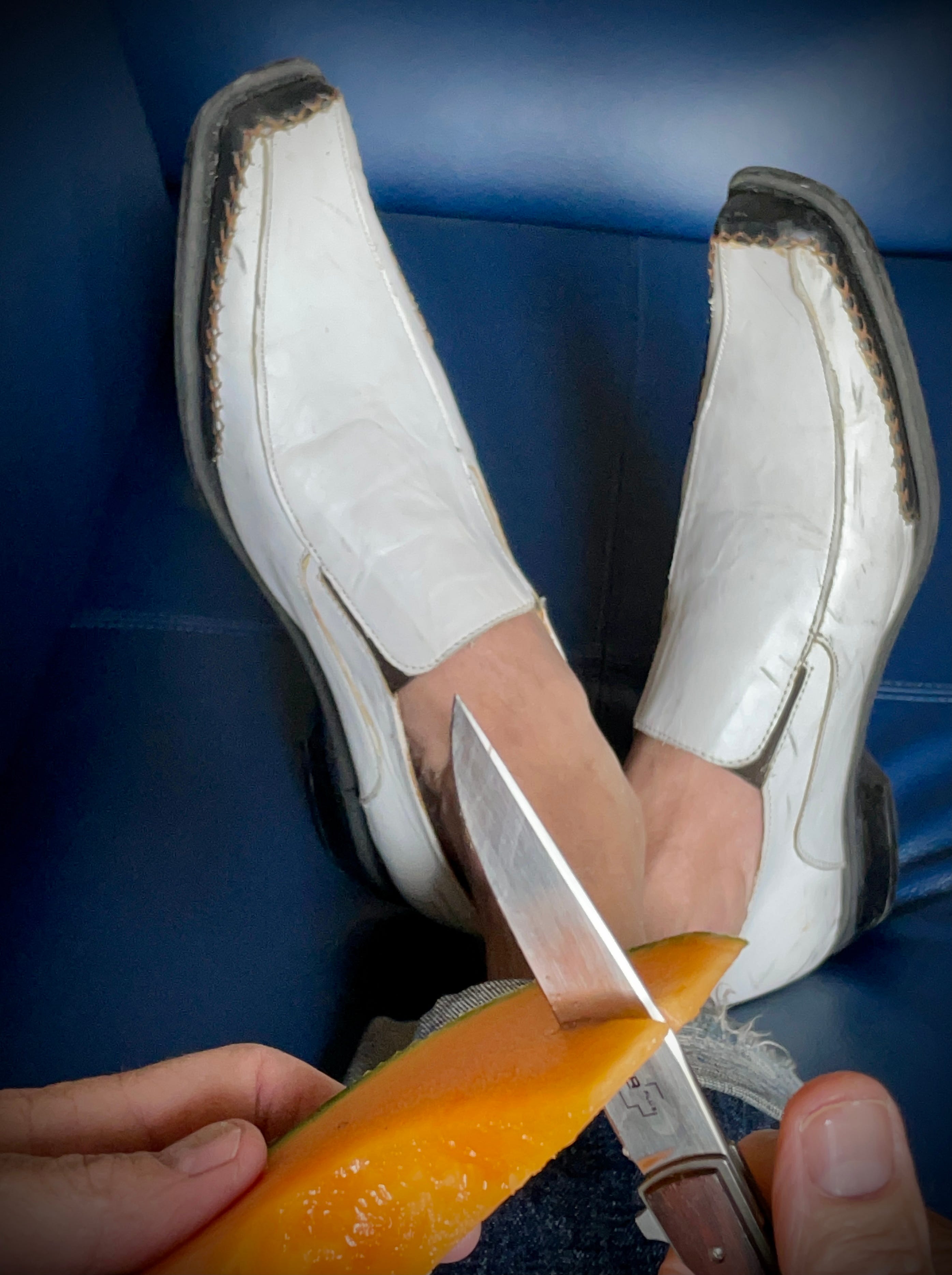
Koforidua, 2014, monsoon season. Me in the tiny shop, more a hut, of my favorite shoemaker in the capital of Ghana’s Eastern Region, trying on some long-toed leather loafers when the sky opened and a flash flood rose. Outside came a brick-red torrent down the tight road, cresting over the hoods of cars which had stopped mid-stream. I was trying to decide between lizard skin or white calf when I heard what sounded like a Royal 250 motorcycle spilling sideways into the open gutter.
Which would have been my Royal 250 motorcycle.
A cheap Chinese knockoff of a Honda XR250, but it was my cheap Chinese knockoff, and my only transportation that year in equatorial West Africa. I’d already put 8,000 miles on it, spilling it twice at high speed on jungle roads over mountains when tires blew. Younger son, on his own ill-advised African adventure, inherited it a few years later and spilled it again. It was a spillable feast that moto but we had a good mechanic.
The rain stopped as soon as it started—sun back out, tarmac baking in the midday heat. We got the bike upright me and the shoemaker, out of the gutter, like everywhere in Africa a concrete canal next to the road about two feet deep with no barrier. A woman with a pyramid of loose eggs balanced on a tray over her head stopped to watch shoemaker and obruni (what Ghanaians call white people) struggle with the fucking moto. After letting the oil drain back down into the pan I was on my way. I bought both pair of shoes.
Spend enough time on menswear blogs and in chatrooms and you will detect a through-line, namely: what the hell am I supposed to wear?
Which is a new problem for men who used to have strict dress codes, especially for work. That’s why they invented suits, basically daytime pajamas, so men wouldn’t have to stand before the closet scratching their heads, trying to decide which jacket and trousers might work together. Problem solved.
Now it’s anything goes which seems liberating but is not. Now men have to think about what to wear like they did before the suit, almost as hard as talking about feelings. Some men in the management class still default to navy suits, now with no tie, a look ostensibly rebellious even mischievous but in its broad adoption stultifyingly conformist—the new MBA uniform.
Beyond that and the finance-bro zip-up fleece, the office default is now chinos with a polo shirt and trainers (aka dadwear aka normcore), maybe loafers on a client day. Then there’s full-on slobwear—tech billionaires because they can, or that senator from Pennsylvania who’s a walking laundry hamper.
But there is another way to think about clothes, which is to think about their stories. All clothing has a story, if only I bought it on sale at Zara, notwithstanding the longer story of said sweater’s provenance.
We do this instinctively with food, because what would food be without stories, without provenance? Consider wok-fired charred Chinese broccoli, me and Sarah at an outdoor restaurant in a hutong in Beijing first night, 2012 (son sleeping off jetlag), cloaked in I guess oyster sauce, sweet soy, sesame oil, rice wine. Now I make it in Rome, for friends, my way. Now it’s my story.
So it goes with clothes. Where I live there’s a $136 billion fashion industry around a simple story: Made in Italy. People around the world trust that phrase to mean quality, often true. And certainly handmade is part of the story, call it a chapter because there are plenty of large clothing factories in Italy where skilled Chinese immigrants turn out wool and silk garments in front of machines the size of shipping containers; Geppetto in his workshop with needle and thread still exists, mostly at bespoke tailoring houses, but the Industrial Revolution happened and here we are. Artisanal clothing might make for a “better” story, but the point is that the clothes become part of your own story.
Take my shoes.
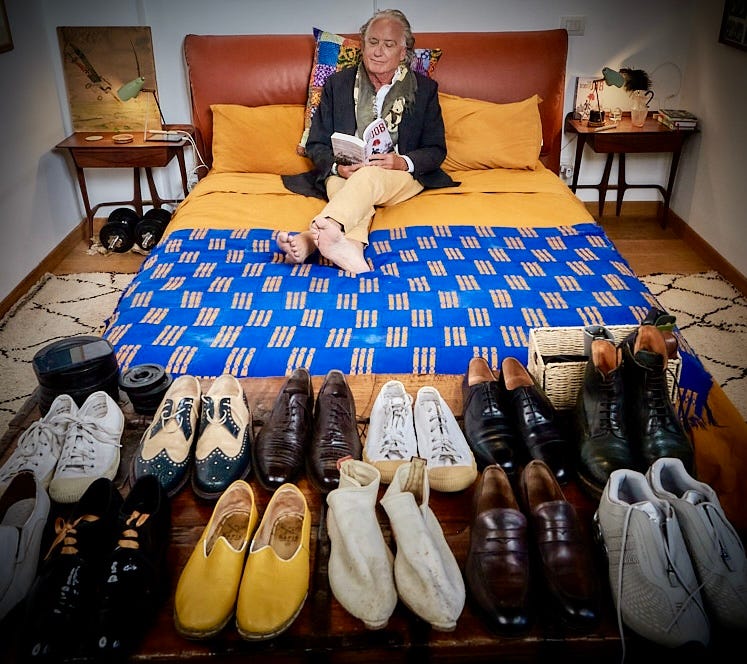
I have a lot of shoes although I know men with more. My collection includes a few classic handmade British pairs—black John Lobb jodhpur boots; brown full-grain Edward Green chukkas; George Cleverly suede oxfords—all of them made in Northampton, a center of bootmaking since the 12th century which is a story in itself.
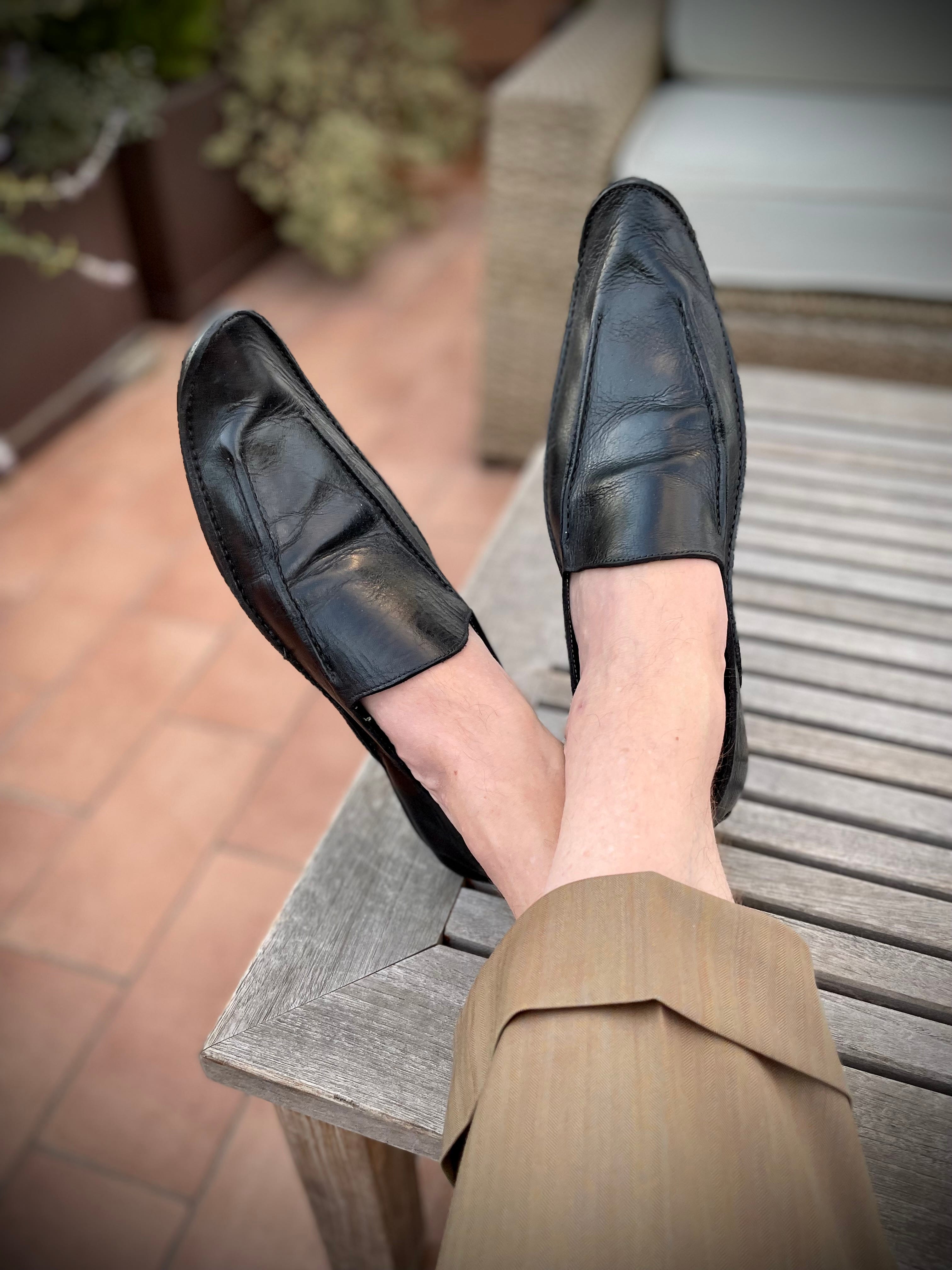
But my closet is global and includes everything from Japanese Converse-type canvas sneakers in several colors; Spanish espadrilles; Mexican huaraches I bought on the street in Nogales between too many margaritas; clunky two-tone Hungarian wingtip derbies known as budapesters which I bought during a dental tourism visit there; Turkish soft leather yemenis; and even a pair of pointy-toed vintage Persian giveh slippers with woven cloth uppers and leather soles, which I wear around town when I’m in an elfen frame of mind.
Persian elf slippers and African winklepickers not being for everyone, my shoes are my story.
So what the hell am I supposed to wear?
I vote for stories. Let’s cook stories, and wear stories. Our own.