
The Nonna in the Window
Nothing to see here...

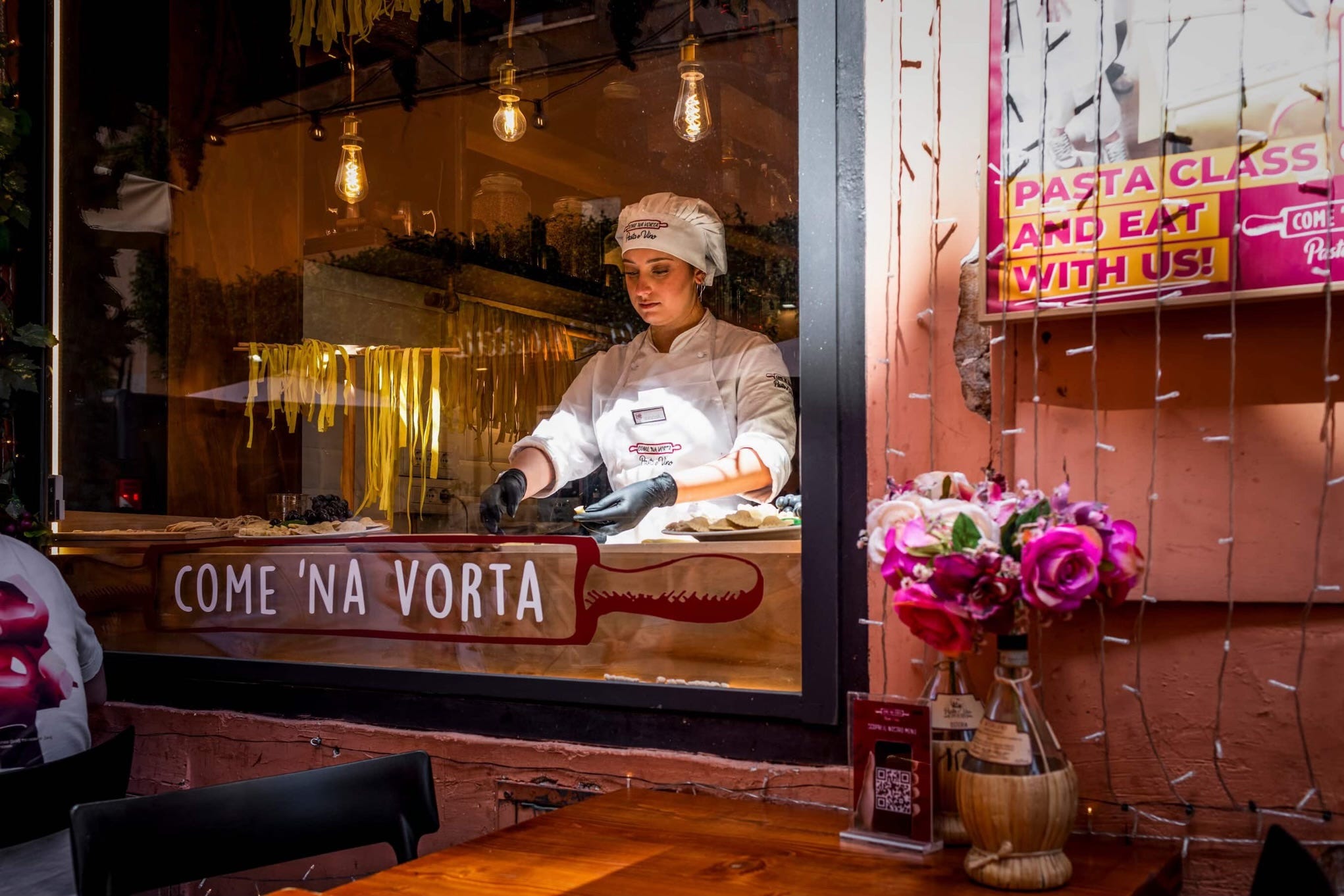
Grandmothers are in the news, rather grandmas in the kitchen in the news. As a new grandfather as of Tuesday, and one who spends a lot of time in the kitchen, I have thoughts.
A recent article in the Washington Post reported on what the headline calls a “new tourist trap” in Rome—the proliferation of so-called nonna-in-the-window trattorias, where you can watch Italian grannies rolling out pasta by hand while you wait in line for a table with dozens of other Americans in cargo shorts, flip flops and backwards ball caps.
Then this in the Wall Street Journal, about how diners around the world “are finding comfort in restaurants where dishes taste just like grandma used to make them.”
A story this week in Food & Wine offers European dining advice from American travel guru Rick Steves. He favors out-of-the-way authentic places where “Grandma’s in the back peeling potatoes.” Poor Grandma! Doesn’t she have a sweater to knit?
Finally there’s the Netflix film Nonnas, inspired by the real-life Staten Island restaurant (Enoteca Maria, which in actual Italy would refer to a wine bar not a restaurant but whatever) where the cooking is done by actual grandmas—at first Italian nonnas from around Italy but now by guest grandmas from around the world.
To get back to Rome, let’s say first that nonna-in-the-window restaurants are not new, they’ve been around for years although possibly spreading. As a journalist I am aware that newspapers are in the business of reporting news—meaning, objectively, stuff that is new. So I get the urge to call anything “new,” but being new to a visiting reporter doesn’t count. This in itself is a sort of journalistic “tourist trap.”
About those nonnas in the window. However the owners of these tourist traps might classify their employees, they certainly don’t consider them nonnas—and not just because the women in the windows are objectively age 20-40. Okay, Italians do talk about la cucina di nonna when describing trad food as opposed to broiled salmon and avocado with sesame vinaigrette. And nonna can be used pejoratively (mildly) like describing a frumpy dress or old-fashioned tableware or a floral upholstered chair at the flea market. “È di nonna.”
But the image of an aproned nonna in the kitchen, rolling out fresh egg pasta while dispensing life wisdom and scolding dogs, is mostly a cliché embraced by foreigners for whom nonna is one of their nine Italian words. In Italy itself, there’s increased pushback against this tired image. Why is it assumed all Italian grannies cook all day? And if so, why are most professional Italian chefs men, often men who treat their employees like shit or sex objects?
In reality, as math would have it, most current Italian grandmothers are Boomers—and not even first-growth Boomers who are by now great-grandmothers. Born in the ’50s and ’60s, today’s nonnas grew up driving cars, watching TV, dancing to rock and shopping in supermarkets. Most can cook, and cook well from a lifetime of experience and generational knowledge. But likely as not they are retired teachers, nurses, doctors, shopkeepers and businesswomen who spent their kitchen time whipping up fast weeknight dinners for their kids. They never owned a donkey or harvested weeds on mountain paths.
Finally: the Post article does point out that most classic Roman pasta dishes are not made with fresh egg pasta but rather dried semolina varieties (like spaghetti and rigatoni) which by definition are not “homemade”: they are extruded under high pressure through brass molds, in factories. But that doesn’t mean fresh egg pasta, from tagliatelle to ravioli, has to be made in-house, much less by grannies. Often it’s made off-site, at a pastificio, and delivered to the restaurant fresh daily. Wherever it gets made, you can trust that any fresh egg pasta in a real Roman restaurant has been made by experts. Even if you can’t see them in the window.
And there’s the word I’m looking for: trust. When I go to a restaurant, anywhere really, I want to let go and trust what I’m being served.
Don’t get me wrong: I like watching cooks cook because I like watching other people work, preferably with a glass of wine in my hand. This works out well in Calabria where neither my daughter-in-law nor her mother will ever let me help in the kitchen. I not only can’t help Mamma Rosa mix up her meatballs, shape them into little bullets (never round) and fry them in a clay vat of olive oil; I am forbidden from cleaning up after dinner. Life can be good in Italy.
And in certain contexts, I like watching pros cook in a restaurant. I like watching pizzaioli make pizzas because in Italy it’s their career; they aren’t working on a novel and they don’t have headshots and a monolog. But they are performers; best place in Rome to watch the show is an inside table at Ai Marmi in Trastevere, where those dudes have been sliding pizzas in and out of that massive wood oven since 1931. They spread the crumbled mozzarella by hand and they don’t wear rubber gloves. A pizza will cost €9-€13 including tax; leave a euro coin if you must tip. The waiters (they are all waiters and they’re not called “servers”) will not be warm and fuzzy. Dinner only, until 2:00 am.
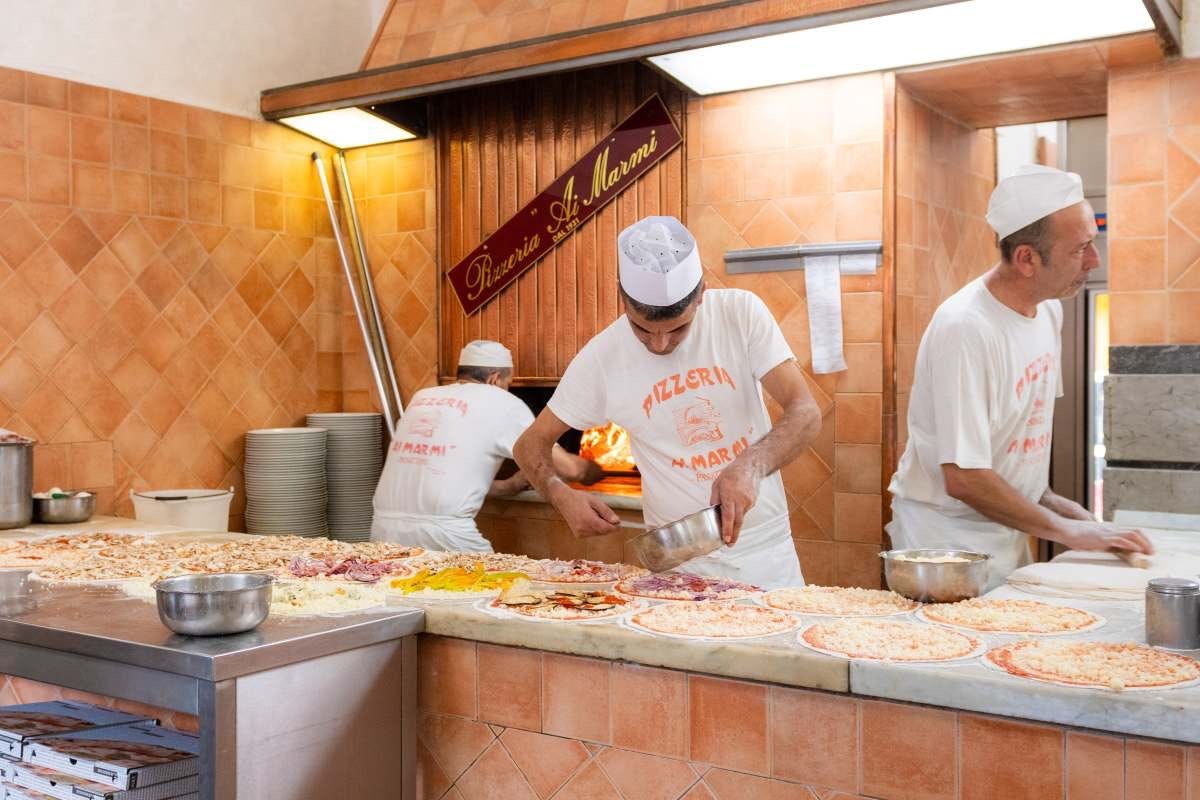
Pizzerias are the only places Italians wait in line for dinner because they don’t take reservations, but the line goes fast—a pizza in those blast-furnace wood ovens takes about five minutes to cook. If you see a line anywhere else, especially for a panino or a tiramisù in a plastic cup, it’s a tourist trap.
Double for trattorias. Real ones take reservations, generally over the phone by a human; online is catching on slowly meaning not in our lifetime. Barring a few guidebook superstars (in Rome that would be Roscioli and Armando al Pantheon, both excellent but with monthslong advance bookings), it’s generally enough to call the day before or even during lunch for dinner that night (no one will answer the phone from 3-7 when real trattorias, not tourist traps, are closed). In major cities they will speak English, just be analog and call. Or stop by in person the day before.
Sicilians have a saying: “To trust is good; not to trust is better.” Or as Reagan used to say about nuclear disarmament, “Trust but verify.”[1] And that makes sense with atom bombs, or asking a stranger in an airport to watch your suitcase while you use the loo.
But with all the stuff in life that we really shouldn’t trust, can we make an exception for handmade pasta in Rome? You don’t need to see it in the window. Trust me.
[1] Actually a Russian proverb, related to the Sicilian saying.