
“This Is Where We Make the Alcoholic”
Moonshining in Africa

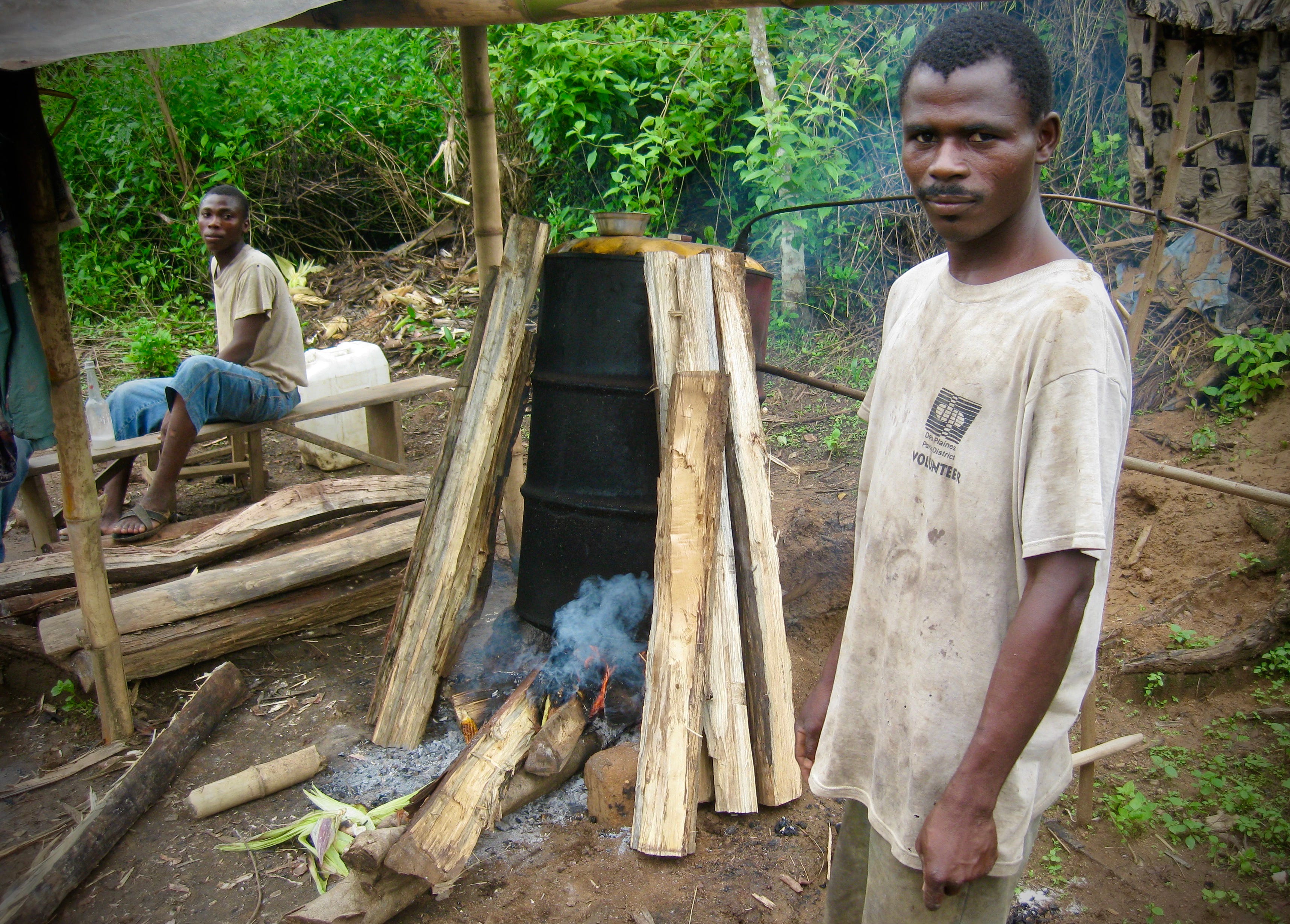
Deep in the bush near Koforidua, driving our Tata pickup along a rutted red dirt track, I saw the setup in a clearing between banana trees. Under a canopy of rusty corrugated roofing sat a blackened fifty-five-gallon oil drum perched on rocks above a fire, two more barrels connected to it by a battered copper pipe. A guy in a grimy American charity t-shirt (“Des Plaines Park District Volunteer”) was feeding four-foot-long mahogany trunks into the fire, which enveloped him in smoke.
My passenger Hayford was a cocoa farmer and village agent for my brother’s Ghanaian battery company; I was writing a book about the business, and giving Hayford a lift home. “You want see?” he said in pidgin English. “This is where we make the alcoholic.”
In Ghana, alcoholic and amateur alike consider this jungle moonshine the national drink. Known generically as akpeteshie or apio for short, it’s a powerful distillate of palm wine. It goes by hundreds of names in tribal languages but also English slang. You might be served Kill Me Quick, Holy Water, Yes We Can, Liquid Fire or African Ice. They will all taste roughly the same, which is to say like gasoline with floral notes of cheap tequila.
There is never a label, no marketing campaign, no billboards with attractive couples toasting on a terrace above the sea; apio is served at makeshift bamboo bush stands along dirt roads and footpaths, poured from whatever used bottle is available, into whatever glass or plastic cup is on hand. It is always served as a shot; there are no apio-and-tonics and God save us from frozen apio margaritas.
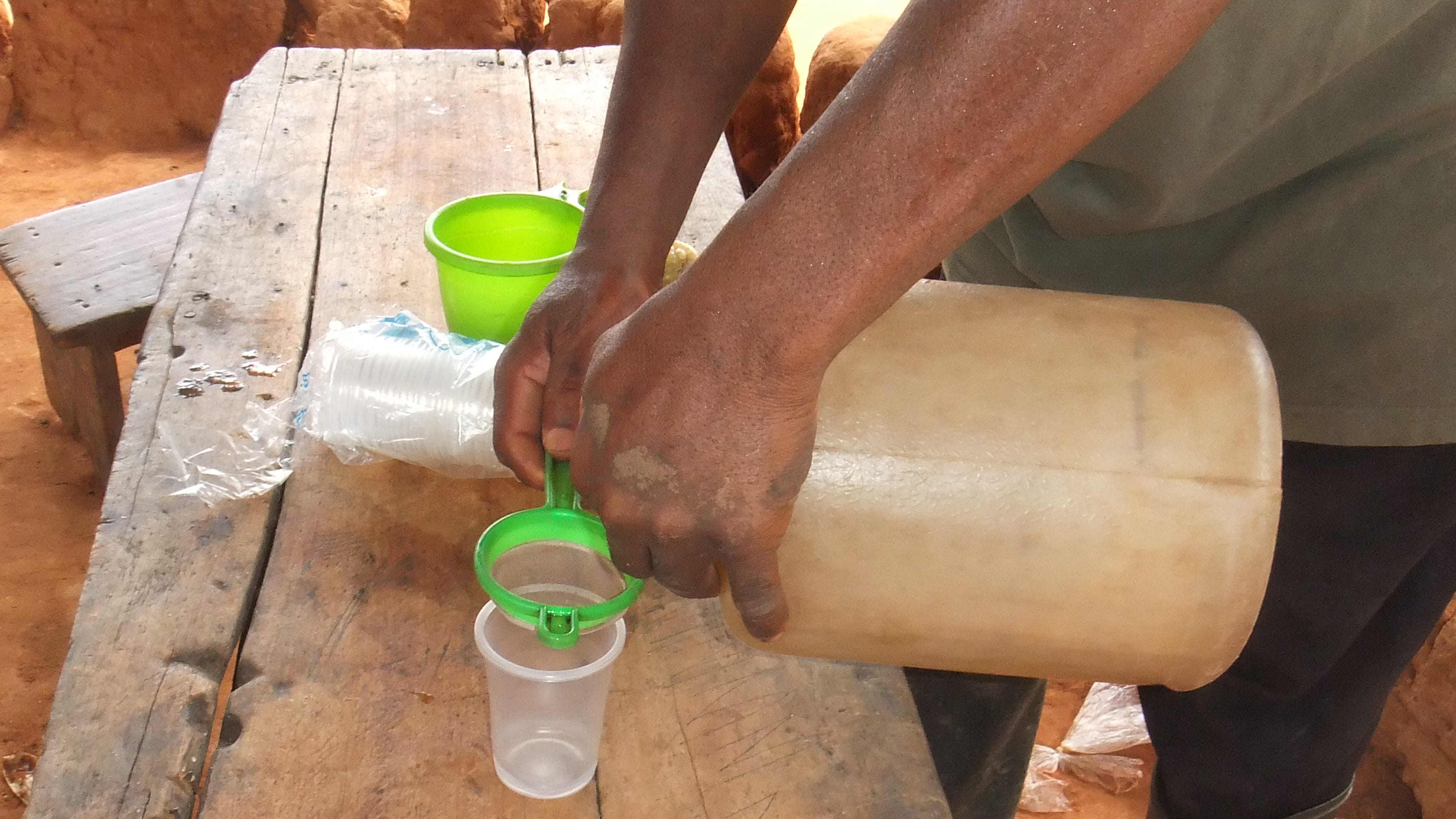
The strength, as you might imagine with homebrewed hooch, varies but can be roughly measured by the number of times the drinker pounds his chest after downing a shot.
Apio is not a pensive high. A shot, make mine a double, leaves the brain behind and goes straight to the knuckles and toes. Apio does not inspire poetry; it inspires swinging a machete in a field of cassava. My first taste of apio brought back memories of vineyard workers in the Rhône delta, rough men with hands like tamarind pods who would gather at the Bar du Commerce in Saint-Laurent-d’Aigouze at seven in the morning and down shots of Pastis before heading out to the fields in the searing Provençal heat. How do they do that? A question posed every morning by the art history student, himself swinging a shovel in the harvest of Romanesque sculptures but fortified only, and he now realizes insufficiently, by café au lait. Apio made this clear.
And clear it is, like water, those stinging shots. The drink has lower-class connotations—in a country with essentially no middle class—but lawyers and businessmen in the capital of Accra also keep a flask at home, tucked behind their bottles of Johnnie Walker and Tanqueray. Women drink it although rarely in public. It’s said that apio stimulates the appetite and is thus favoured by women who, after a day cooking and tasting before the fire, have no interest in actually eating the meal they’ve prepared. A shot of apio and they’re hungry. This strikes me as rationalization but I’m not one to judge.
Also: apio costs roughly one-tenth that of Western brand liquor, which explains not just its appeal but its history. In the 1930s the British masters of then Gold Coast banned apio, deeming it vaguely immoral. In reality, apio was cutting into their sales of Scotch and gin. Hence akpeteshie which in the Ga language of Accra means “the secret thing.”
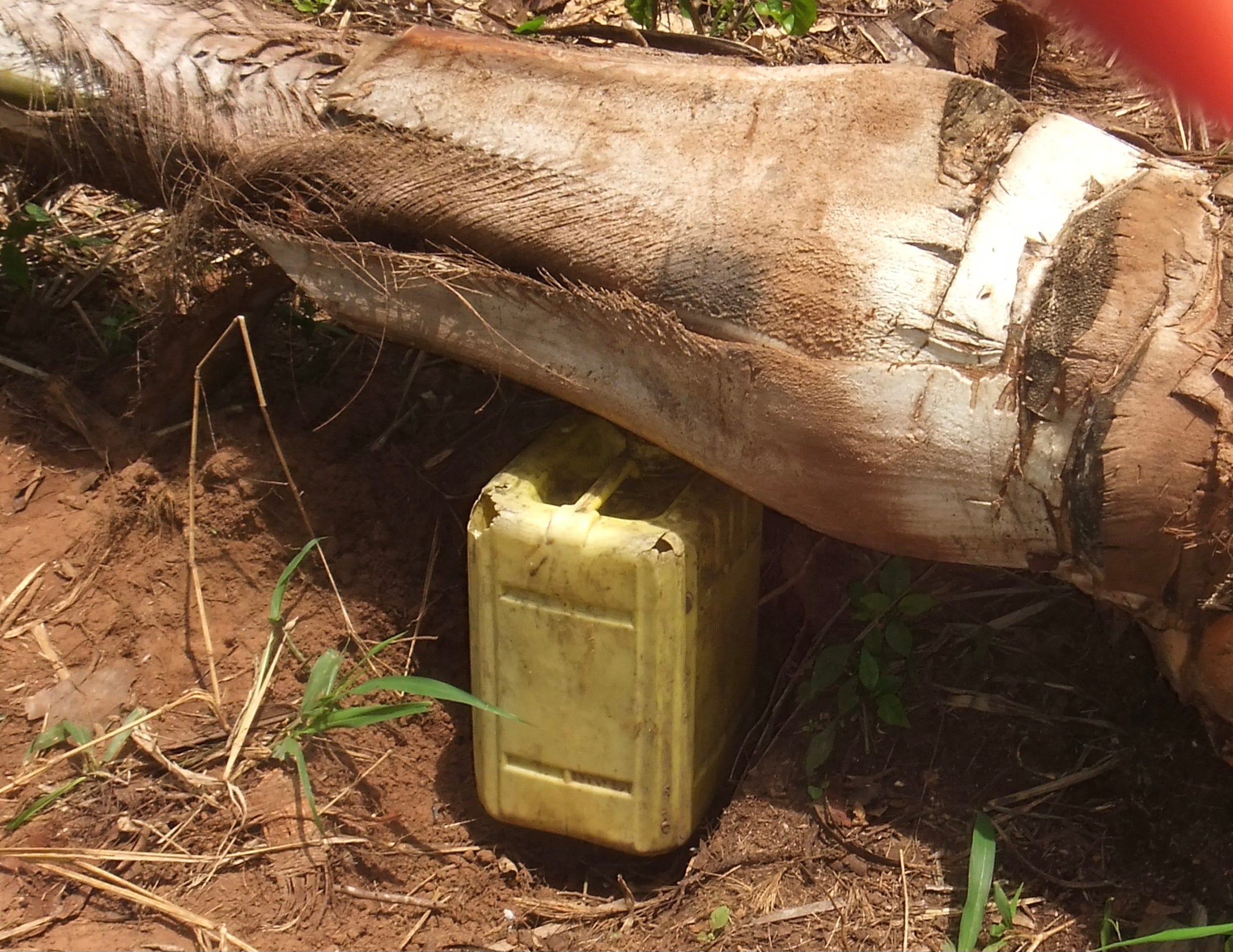
It starts at the palm tree—a date palm, an oil palm, a raffia, they all make sap which must be extracted. In a perfect world the sap is tapped from live trees, which is slow. In the real world, meaning the developing world where people live on a dollar a day, the trees are cut down, then slashed and burned at the base to speed the sap, which is collected in plastic jugs. Farmers in Ghana understand deforestation, but the children need school books and so palm trees meet the machete.
The sugary sap is then fermented in plastic barrels for a day or so. The resulting frothy, sweet palm wine is also consumed, often as a ritual around baptisms and funerals.
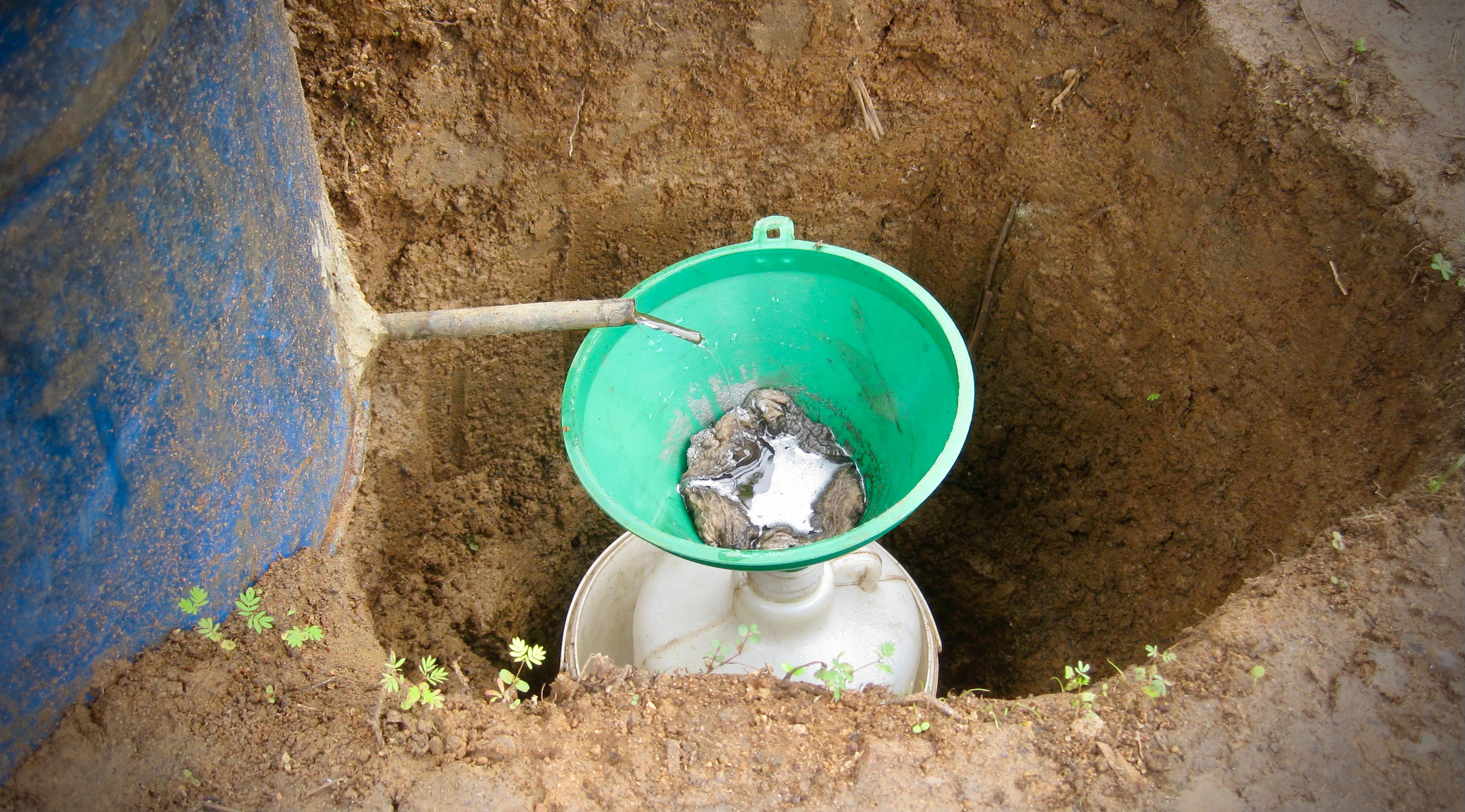
But some ends up in the still. There it boils into steam before condensing in the copper pipe as it passes through cold water and, finally, drips into a flask.
Weeks later I spent a night with my friend Jonah, a cassava farmer in Otareso, a village with no electricity. Night there is like camping except no one is on holiday. After a dinner of roasted chicken giblets, the men came around Jonas’s makeshift bar to drink apio under a kerosene lantern. They were immigrant farmers from Benin, which is even poorer than Ghana, and so we spoke French. Someone had a boom box. We played Congolese soukous and danced, and pounded our chest with every shot.