Who Gets to Make Ravioli?
Being the first American contestant on MasterChef Italia might not make me an expert on European immigration. Then again, maybe it does.

Last week the White House released its new National Security Strategy, a predictable mess of contradictions and muddy thinking with an over-arching theme of xenophobia. The destruction of Western civilization by the wretched refuse of other teeming shores (wait, isn’t that written on the Statue of Liberty?) is projected onto Europe, which the paper informs us faces the “stark prospect of civilizational erasure.” Not to worry: “We want Europe to remain European.” Whew!
The paper formalizes Trump’s racist worldview, seen when he arrived in Scotland last July and gave the UK news media a tarmac lecture: “On immigration, you better get your act together or you’re not going to have Europe anymore!”
Mansplaining aside, Trump’s rants and the new security paper have touched a sensitive nerve here in Italy—namely, what exactly does it mean to be European? Is it about melatonin levels? Because I have friends born in Naples or Rome, to parents from Nigeria or Ethiopia, who grew up speaking native Italian and differ from their neighbors only in skin color; speaking on the phone, they sound as Italian as the country’s blond-haired, blue-eyed prime minister—also rare physical traits here.
Maybe it’s about religion? There are Muslim immigrants to be sure, mostly friendly shopkeepers from Bangladesh; without them there would be very few convenience stores around Rome, or tailors who can fix a torn trouser seam for five euros. Most African immigrants are Christian, and generally more devout than famously non-practicing Italian Catholics.
One assumes the American president does not have in mind the dire threat to Europe of white Yank immigrants like me. After all, like Trump, my grandparents came to America from continental Europe; I returned. That makes me…what? A European once removed?
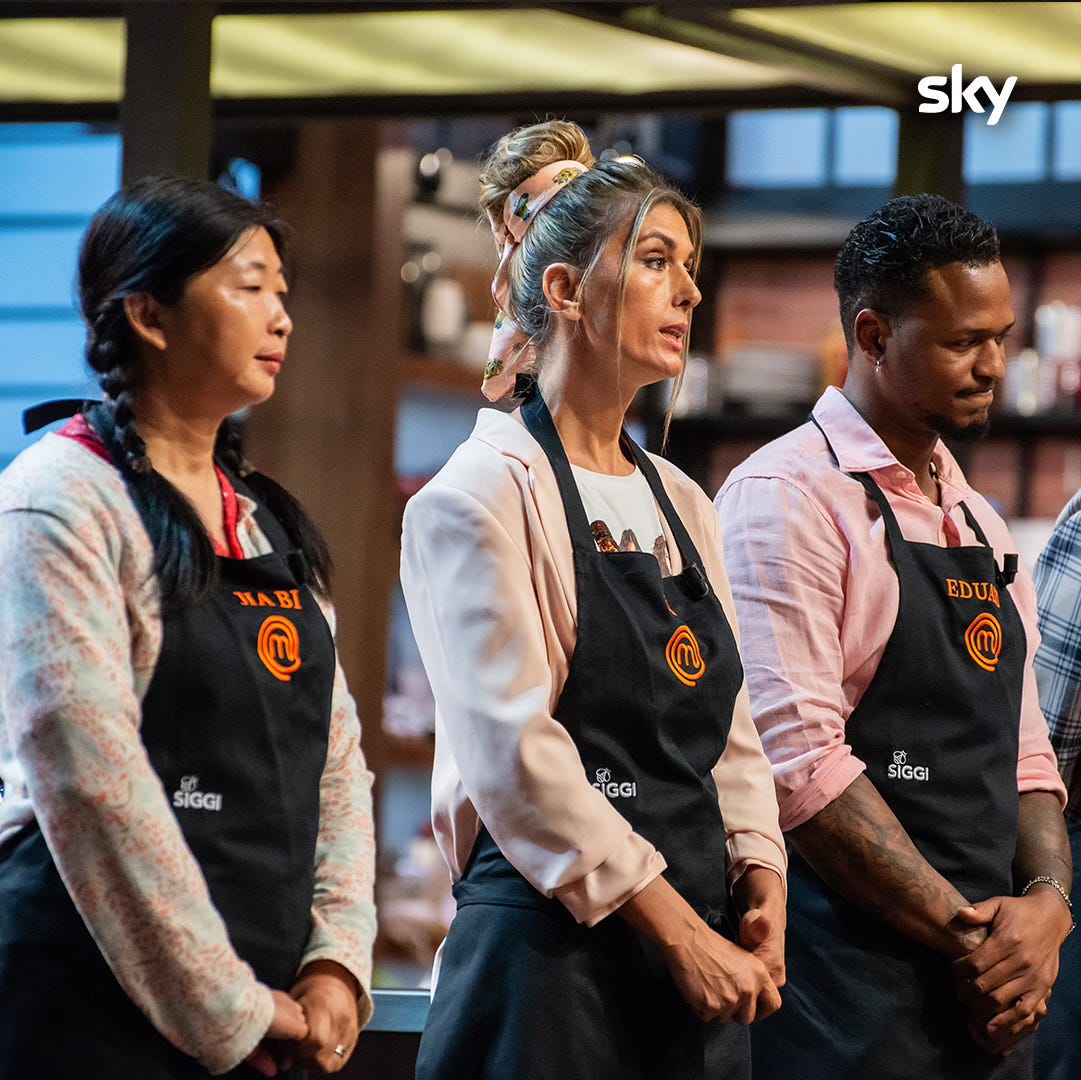
Which was not the case for some of my fellow contestants on the 2020–21 season of MasterChef Italia. There was Eduard from the Dominican Republic; Sedighe, a young mother from Iran; Monir, born in Italy to Moroccan parents (Italy does not have birthright citizenship); Jia Bi, from Shanghai; and Ilda, a European but from non-EU Albania, one of the continent’s poorest countries. They all spoke Italian; they all knew how to make ravioli from scratch. Well, Jia Bi made dim sum.
The producer of the show told me that our ratings indicated one of most popular seasons in the history of MasterChef Italia. Doubtless one reason was Covid lockdown, with people stuck at home. But the onstage chemistry of we stranieri charmed Italians, used to seeing mostly themselves on TV. We were…different.
Even so, polls regularly show that most Italians want fewer immigrants. But they’ll take the food. In Rome there are more Vietnamese restaurants than French, which may reflect the Italian’s deep suspicion of other European cuisine. About German food the less said the better; as for French, beyond those questionable sauces—what are they hiding?—even the soups are a mystery. One night on MasterChef our challenge was French onion soup, which in America I had made maybe a hundred times. Most of my fellow contestants seemed genuinely puzzled by a national dish from the country next door.
The truth, despite Trump’s doomsday alarm, is that there is no “Europe” any more than there’s a single “Africa.” Europeans can’t agree on what’s for dinner, much less when: Swedes gather at six o’clock, or earlier; Italians at nine, maybe later. I feel at home in Rome, but I’m a space alien in Stockholm.
And yet with all the different cultures co-existing in Europe, I believe the continent has room for more. Italy’s culinary tradition of artisanal cured pork salami does not appear endangered by the country’s 2.7 million Muslims, who have brought us lamb tagine. And while it is false that Marco Polo introduced pasta from China (it existed here long before the Venetian explorer), today’s Chinese-Italians give us hand-stretched Dan Dan Noodles—even if Romans insist on calling it spaghetti.
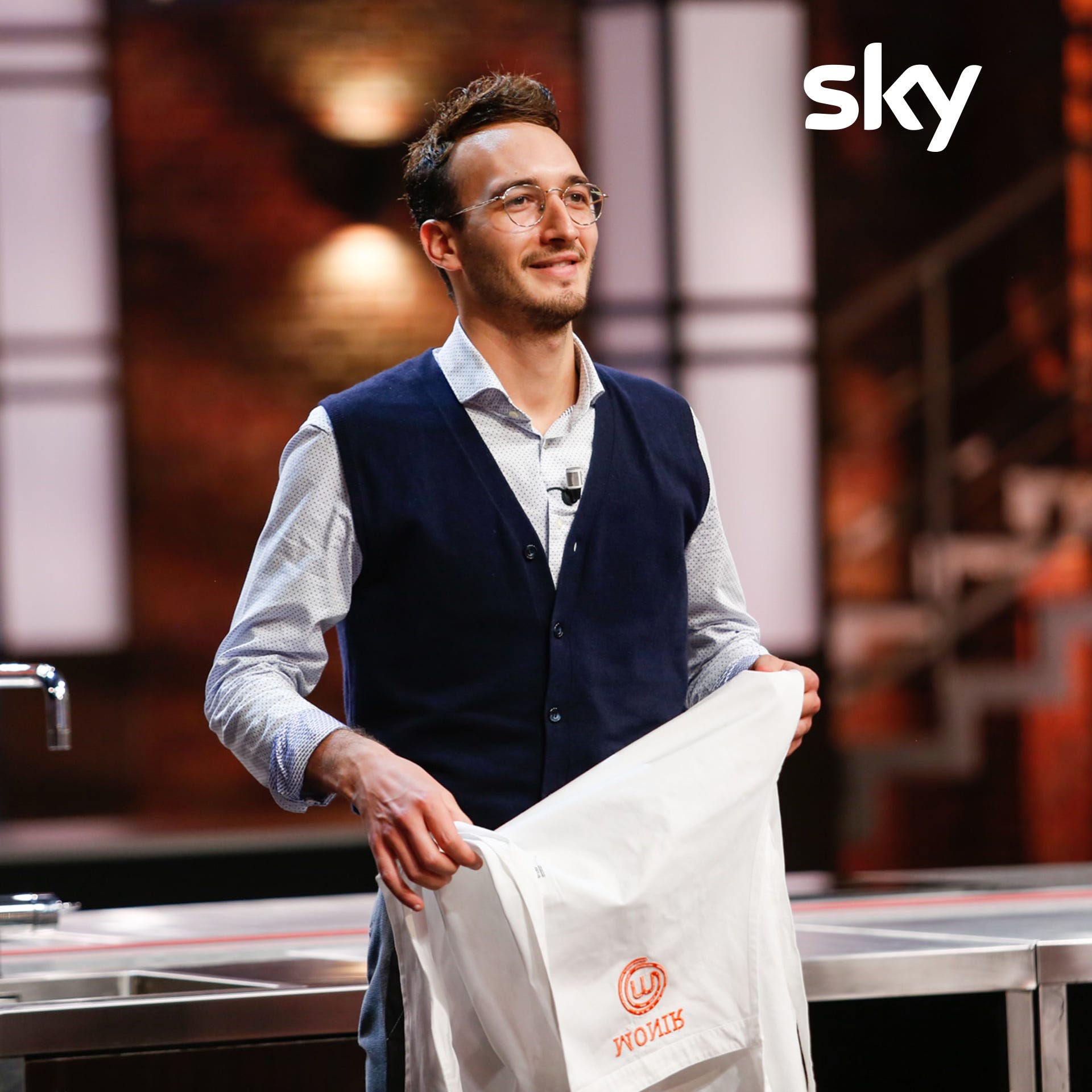
Monir, our handsome Moroccan-Italian contestant, made it all the way to the final four but in the end was eliminated. As he folded his apron and left the studio, he said to the judges: “I hope that people watching us at home will see and understand our genuine sense of integration during this season—a true and honest integration of many cultures, which will never be against the Italian culture but will always enrich it with our own special contributions.”
Me? I made the top 10 and somehow became a national celebrity. The Milan newspaper Corriere della Sera called me “the most famous American in Italy.” I had my doubts given George Clooney also has a home here, but I still get high-fived on the streets of Naples. In Venice, gondoliers tip their straw hats to me.
To state the obvious, my immigrant experience has no comparison to the Senegalese woman selling trinkets on the street in Rome. Still, her journey can’t be so different from that of my grandfather, who came to America with a few coins in his pocket. And that baby tied around her back will grow up speaking Italian. And making ravioli.