
Carbonara Africana?
Could the best carbonara in Rome be made by an African immigrant?

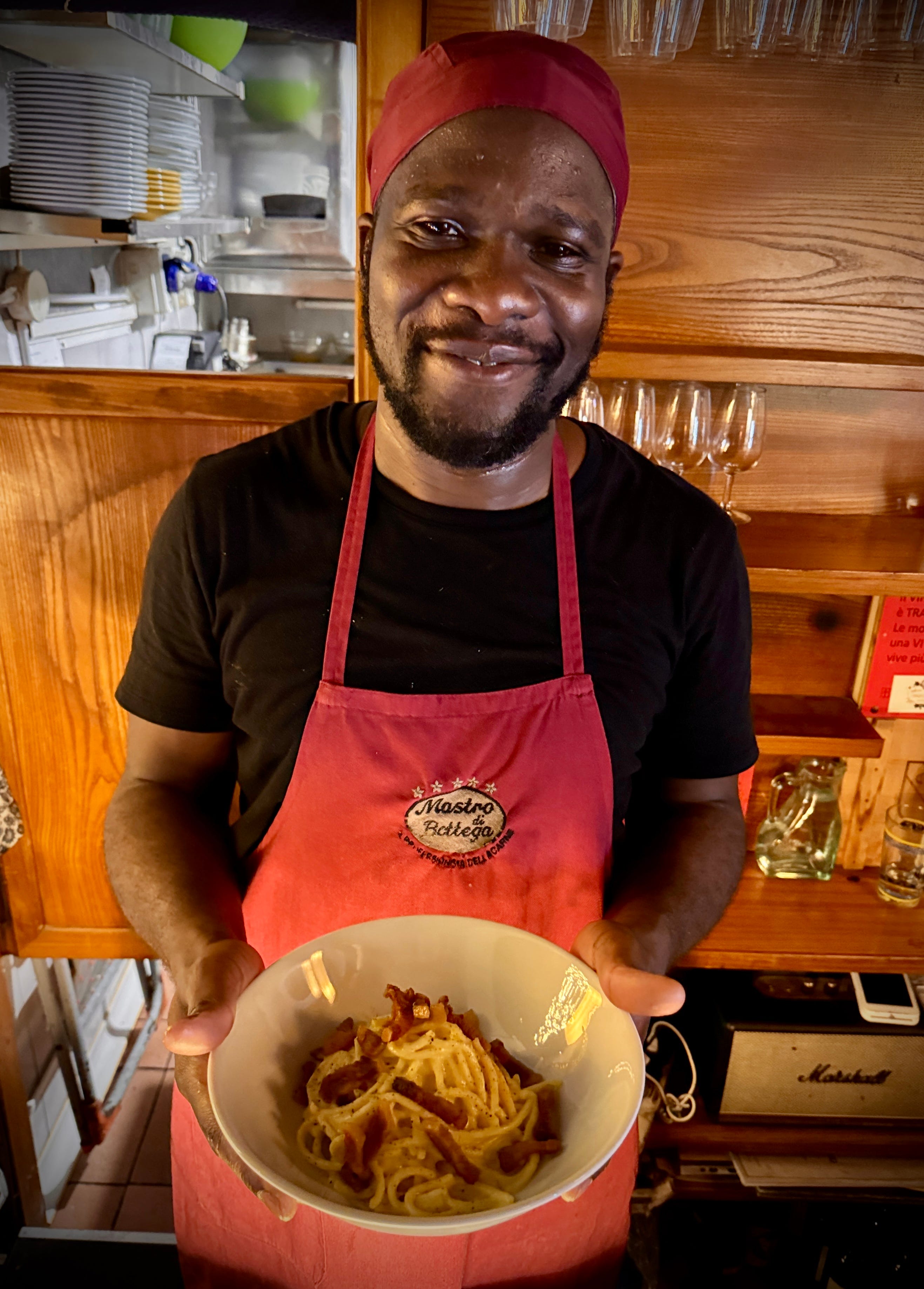
There must be a million carbonaras in the city, most of them pretty good, the best being the one you’re eating, with the wine at the time. Too Zen? Let me start over.
It was Thursday night, me off a five-hour train from Calabria, hungry. I walked over to my friend Max’s enoteca, L’Angolo Divino,[1] to see what was cooking; the small menu changes daily but usually includes a homemade pâté (uncommon in Rome), meatballs in sugo and a pasta dish or two.
The place, just off Piazza Farnese and the French embassy, was founded by Max’s grandfather in 1946 when Romans were living in the rubble of their bombed-out city and eating pasta (when they could find flour) with whatever weeds they could forage. They had just kicked out the king and approved a new democratic Constitution, women voting for the first time. Nonno’s place met the times, selling wine and olive oil from barrels to the neighbors. You could live without meat, not without olio e vino. The locals would come by and refill their household flasks from the barrel taps.
Times change, now Max runs it as a proper wine bar with vintage and fresh bottles from all over Italy, most of them natural, unfiltered, organic and many biodynamic. He’s an expert on natural wines from small producers and he’s happy to share. The clients are still locals but also lots of tourists—the Washington Post called it “the wine bar of your dreams”[2] and so they come.
As it happened, that night Max was in Sweden visiting friends. Jacopo, the Neapolitan waiter, was behind the bar. A new waiter from Albania was running tables. It was opening night of the World Cup, TV tuned to the Mexico-South Korea match. The march of flags in the opening ceremony did not include Italy’s tricolore, the four-time champions missing out on the World Cup for the third straight time. I sat down at the bar like always.
“Ciao bello! I greeted Jacopo as men in Rome do. (Don’t try calling another man beauty in other parts of Italy.) “I’m in the mood for ravioli.”
“Not tonight,” he broke the bad news. Max buys ravioli made by Mauro Secondi, a master whose pastificio is an hour’s drive east, almost to the ring road, out in the periphery where the real business of Roman cooking often gets done and where tourists don’t go although they could because Mauro, a former sommelier, also serves lunch (no dinner) on a patio outside his shop with bracing Lazio wines for a few coins a glass. Sometimes, with some other artisanal producers (a butcher a baker and a cheesemaker), he hosts Sunday brunch with DJ music, no extra charge.
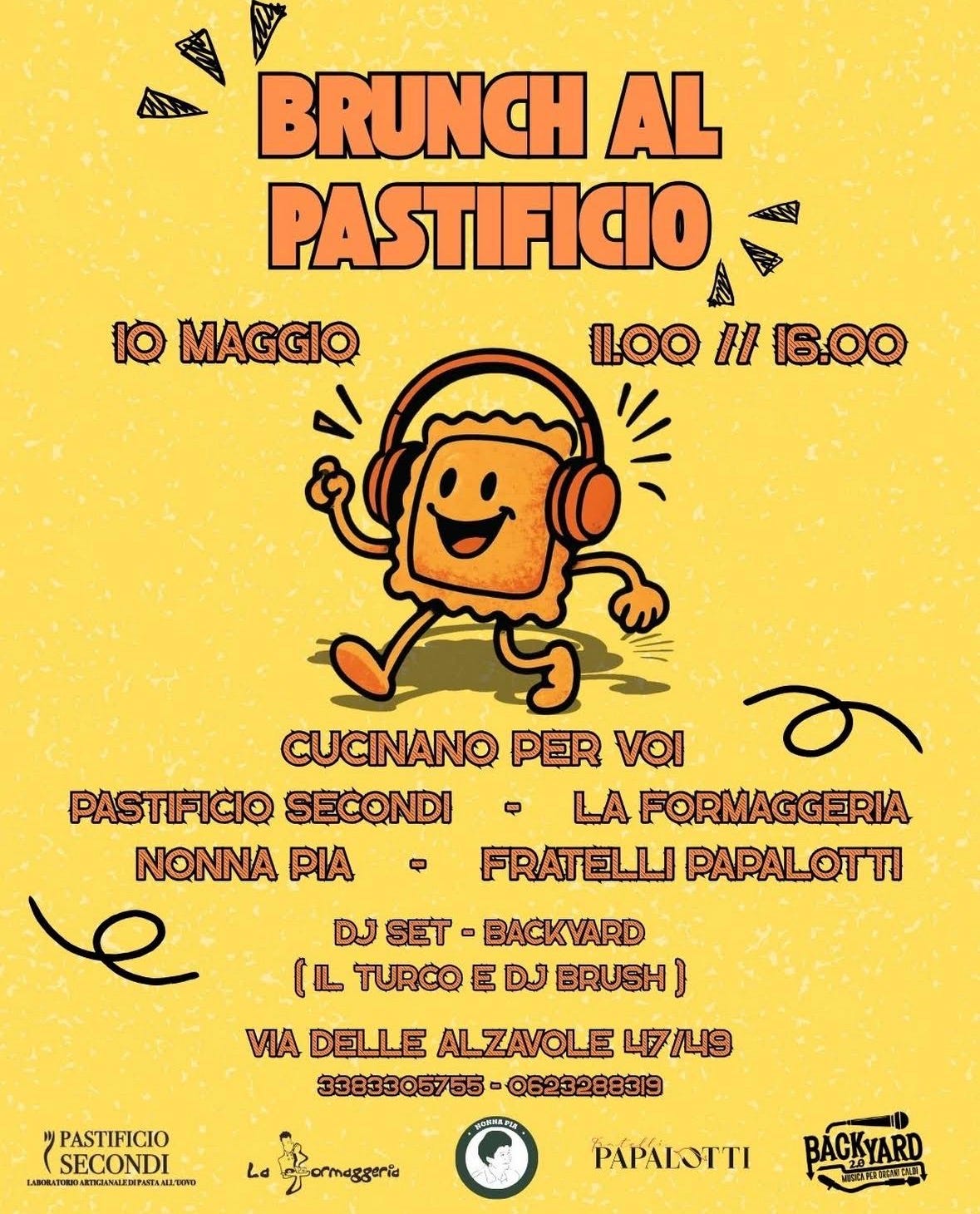
Back at Angolo Divino, Max and his crew take Mauro’s ravioli and dress them in whatever they feel like making that night, maybe simple butter and sage or maybe a walnut cream sauce like they do in Liguria—no actual cream but made with bread crumbs soaked in milk, then blended with olive oil and a hint of garlic. But tonight niente.
“If you want pasta,” said Jacopo, “we have fresh tonnarelli. Eric can make you something off-menu.”
Eric!
Eric would be the chef, from Cameroon. I could see him in the tiny kitchen behind the bar, all arms and apron flaps.
“Carbonara?”
“Per forza!” said Jacopo.
To drink? I scanned the blackboard with the day’s selections by the glass—whites in white chalk (including a few chalky whites), reds in red. It was hot and muggy. “Hey I was just at Il Goccetto [enoteca down the road] enjoying a nice dry Lambrusco, cold as ice. By chance you got one open?” A dry Lambrusco, lightly fizzy and chilled, is the red wine you want on a hot day.
“Not by the glass.”
“No worries, I’ll take a glass of that pét-nat.”
Pétillant naturel being the French méthode ancestrale of making a lightly fizzy wine by bottling during first fermentation, trapping gases. It began in the Loire Valley in the 16th-century, some 300 years before vintners in the Champagne region started producing sparkling wines using the more refined secondary fermentation process.
By contrast to Champagne and its aspirational cousins around the world, pét-nats are spontaneously fermented and unfiltered; with no added yeast and no sulfites, the result depends on whatever is in the air, and on the grapes. They’re fresh, cloudy, funky and unpredictable. It’s not a wine for control freaks. Most have a layer of sediment, enjoyable to some, and mostly they are white, but you can find rosés and reds. The bottles are stopped like beer, with a crimped metal cap. They don’t cost a lot.
And so they are gaining in popularity, well beyond France. Angolo Divino carries several Italian versions, and in summer Max always has one open by the glass. Tonight it was a local Lazio white from Corvagialla,[3] a small organic producer (10 acres!) near the Umbrian border where owner Beatrice Arweiler practices regenerative farming and mostly hand harvesting. Her cellar is “0/0,” meaning nothing added, nothing removed from the grapes. It’s pure, elemental winemaking, the way I used to make hard cider from my apple trees in Maine. Tonight’s bottle was a peach-colored blend of Trebbiano and Roscetto, the latter a rare central Italian grape that came close to extinction but is enjoying a comeback along with the trend to organic wines, thanks to its natural disease resistance.
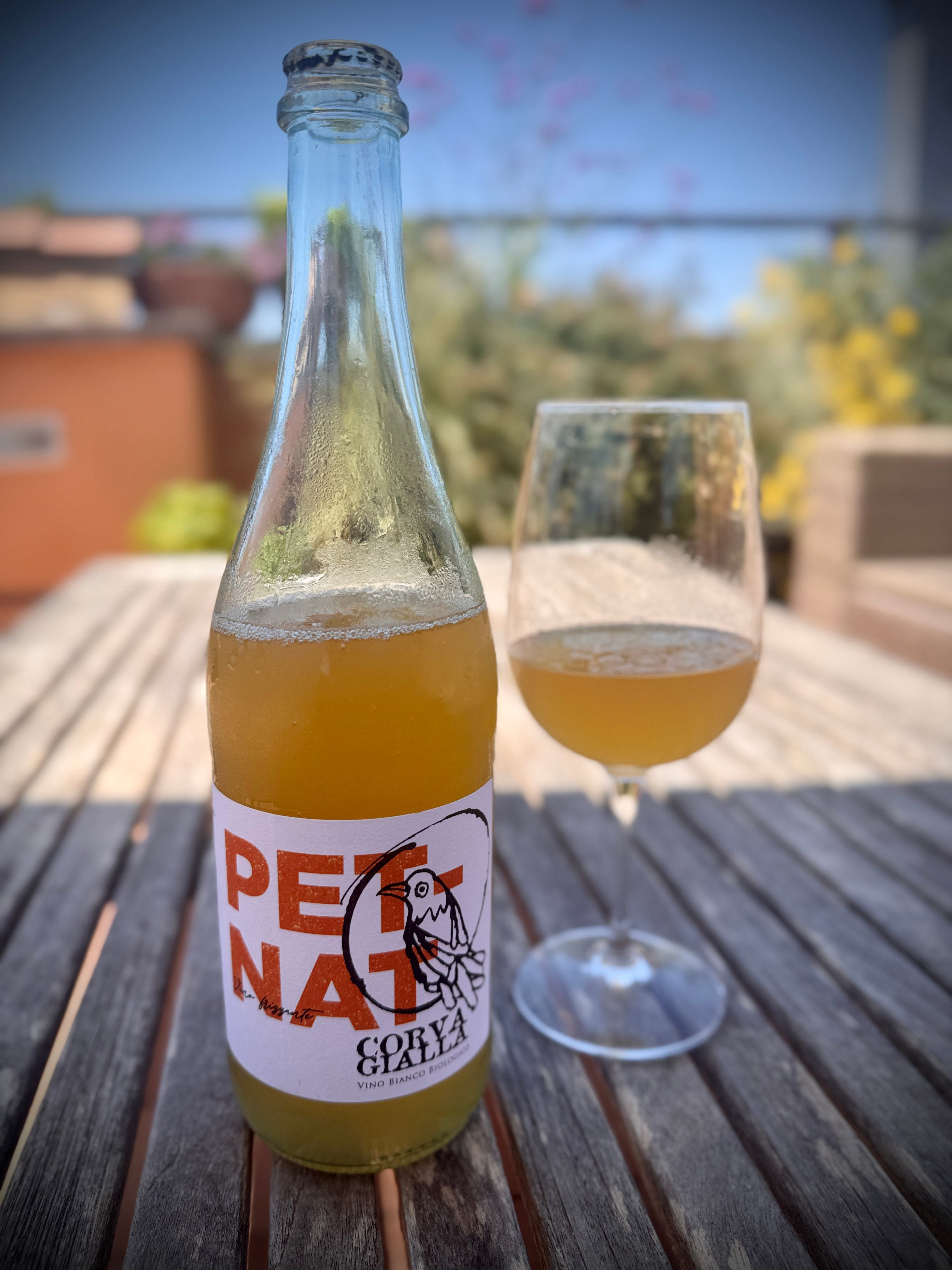
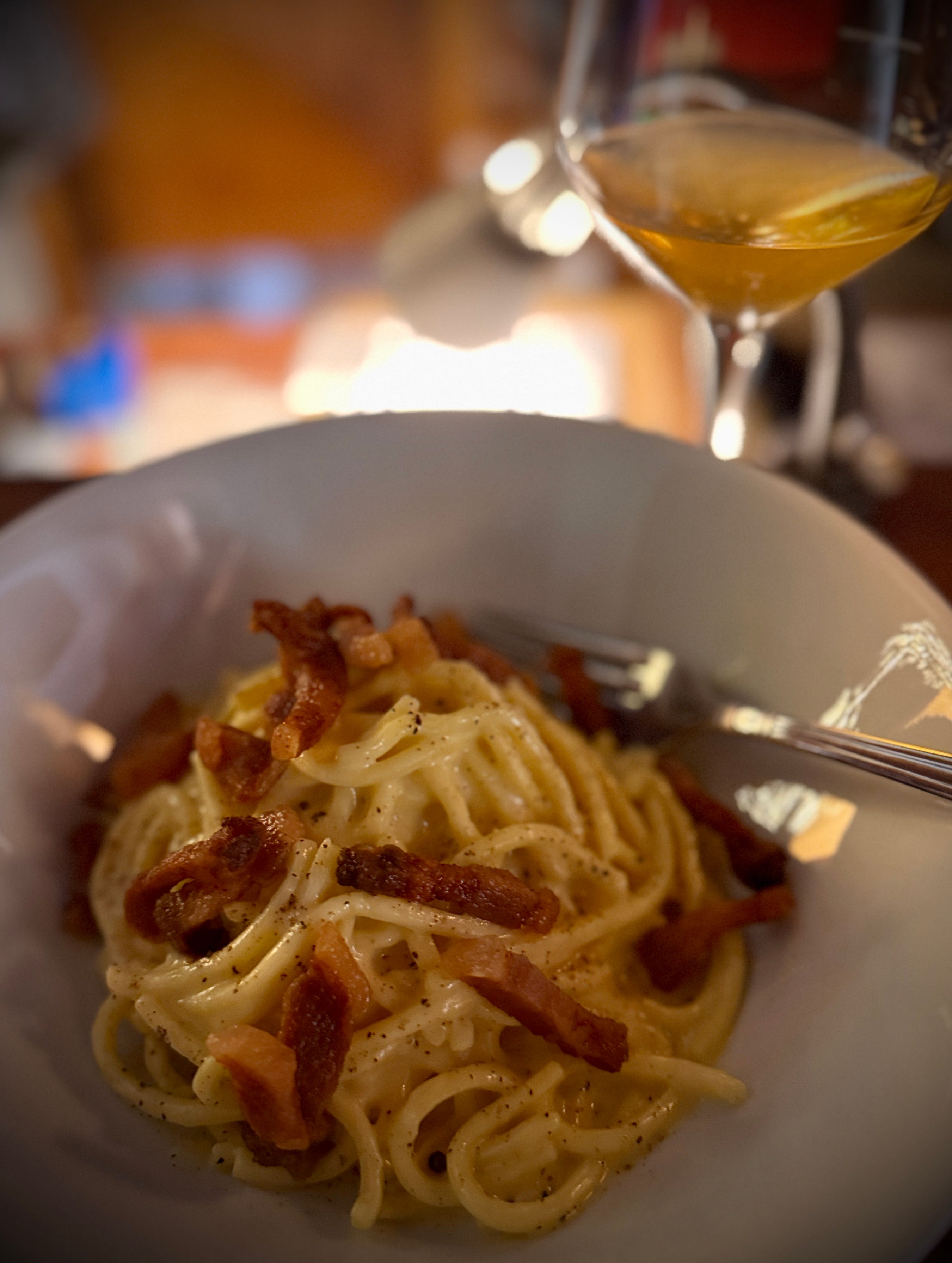
In the glass, Corvagialla’s pét-nat is flinty thanks to the local volcanic soil, and surprisingly complex for a €20 bottle thanks to the natural, anything-goes fermentation. I could drink it with oysters but also pasta carbonara. Which arrived just in time.
The tonnarelli, Rome’s spaghetti-like pasta but not spaghetti because it’s a fresh egg pasta cut by hand so square not round, came velveted in egg and pecorino, a dusting of black pepper. There were really more crispy pieces of guanciale than should be legal. Eric smiled from the kitchen—an African chef from a former French-English colony (mostly French) who can cook anything. When I lived in Ghana, the one-time British Gold Coast, Accra hotels hired chefs from neighboring Togo, a broken dysfunctional former French colony but a place where you can still find steak-frites like in Paris and crispy baguettes. Generally speaking, the Brits treated their former African colonies much better than the French; they opened good schools, they stuck around long enough to teach the locals relatively good governing principles. But they didn’t teach them sauce Béarnaise.
Could the best carbonara in Rome be made by an African immigrant? It was definitely the best that night. I had gone out after my train, not knowing what I would eat, or drink. What I found wasn’t on the menu, but I found it. Or did it find me?
[1] Play on words, L’Angolo Divino meaning the divine corner (it’s a corner shop) but could be read as L’Angolo di Vino, the wine corner.
[2] Article is paywalled.
[3] The name means a yellow female crow.
There are no words for this as an Italian. And frankly no. An African appropriating our cuisine. Just like the South Asians in Canada 🇨🇦 opening an Italian restaurant. By which I see no Italian cooking a Indian food restaurant 😀🤷♀️😞